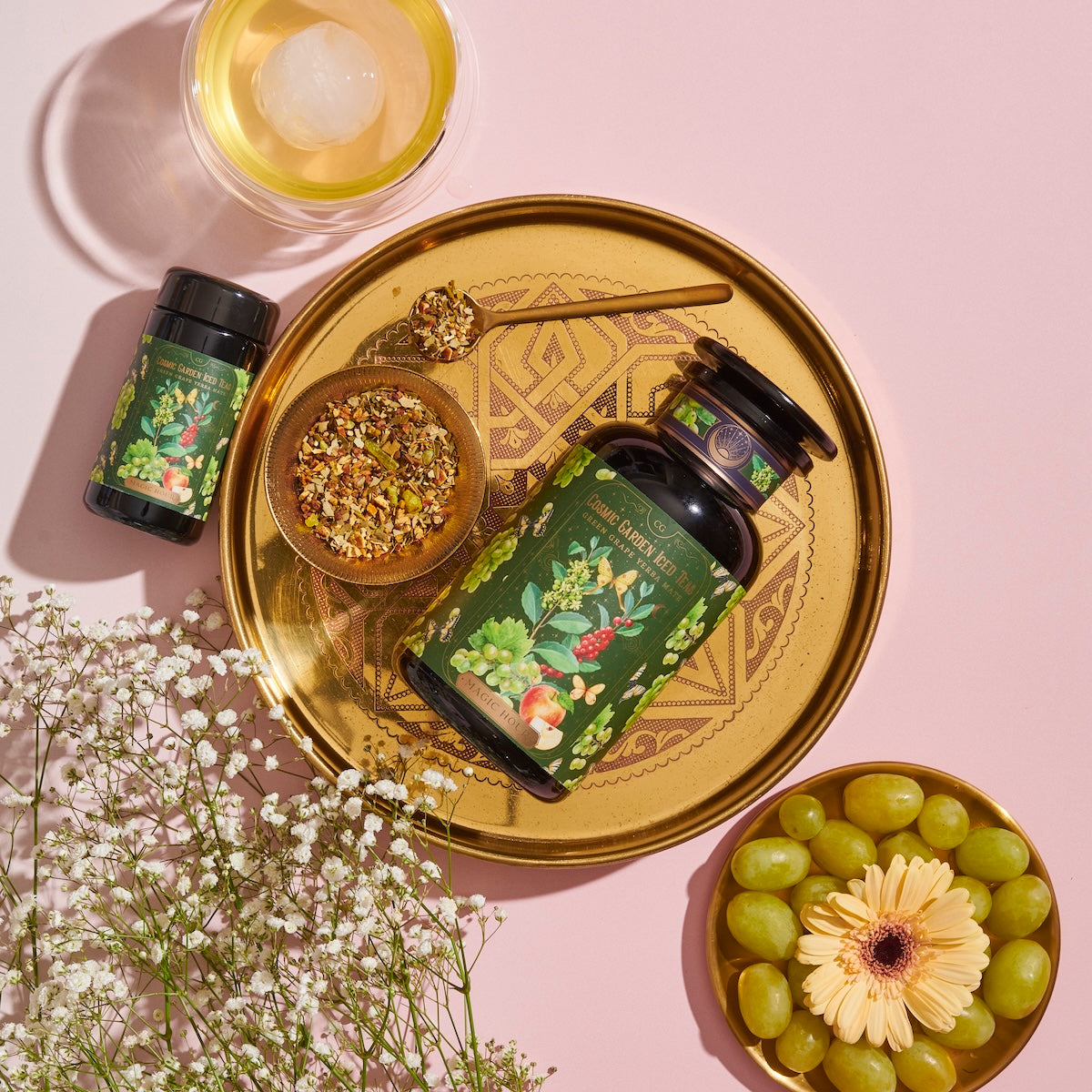
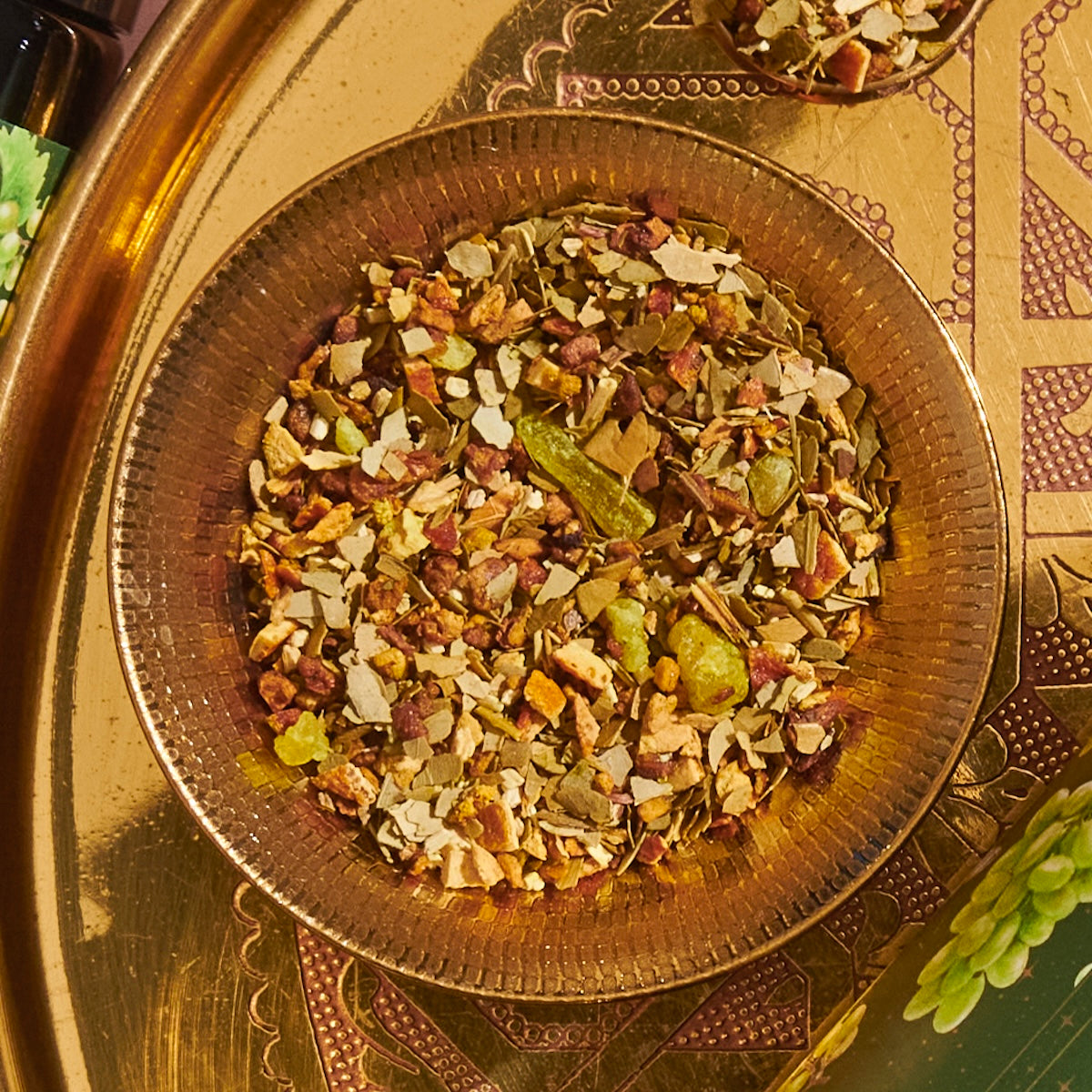
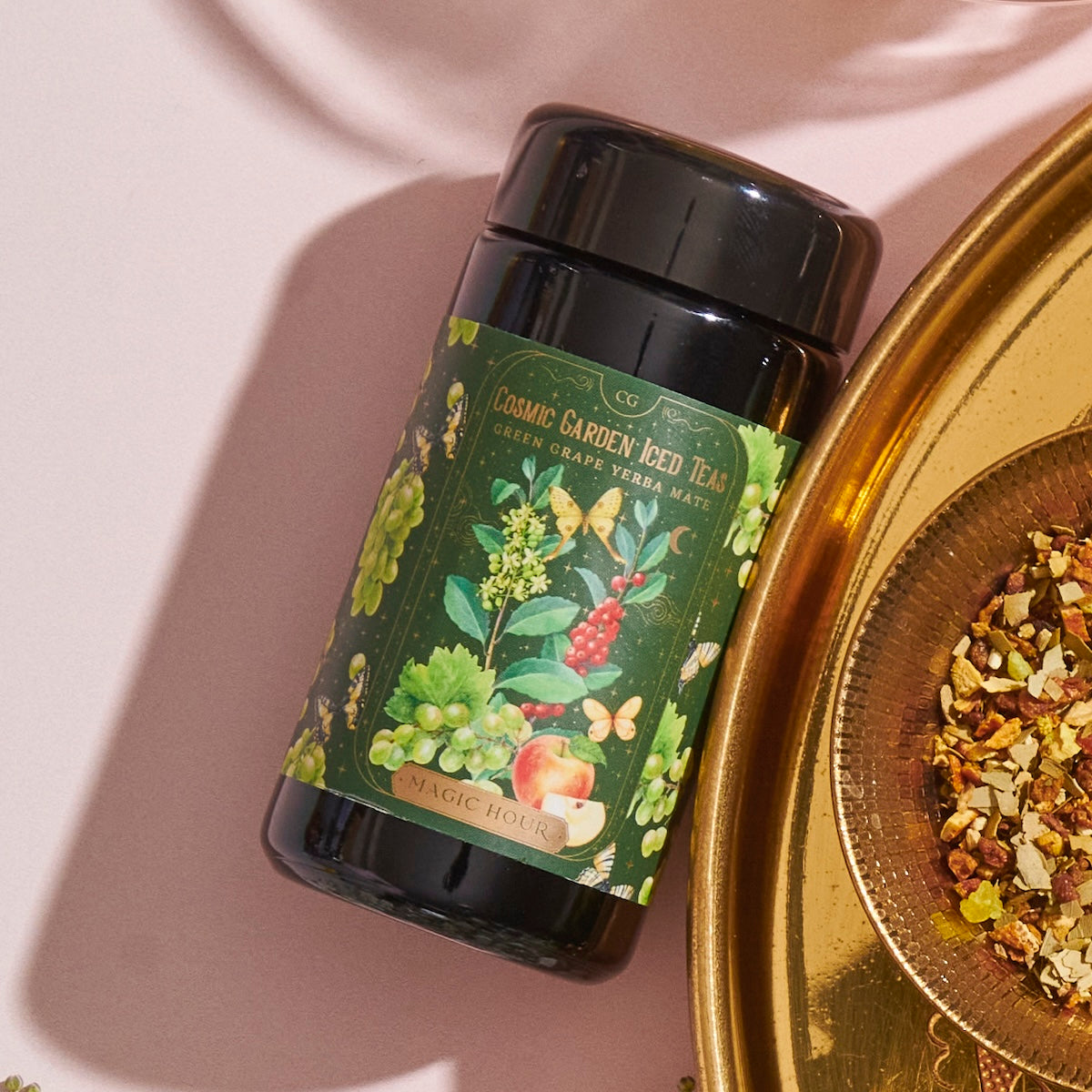
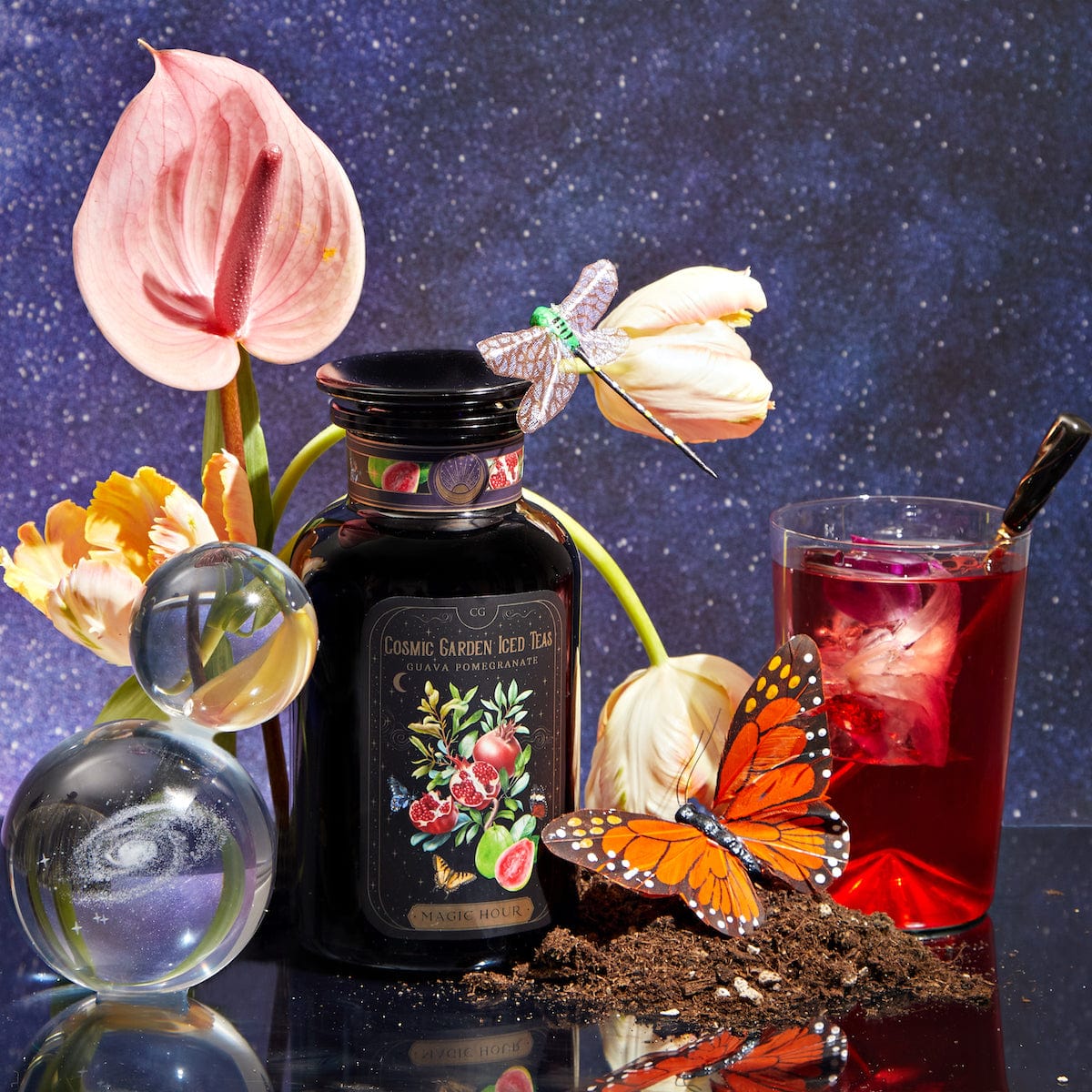
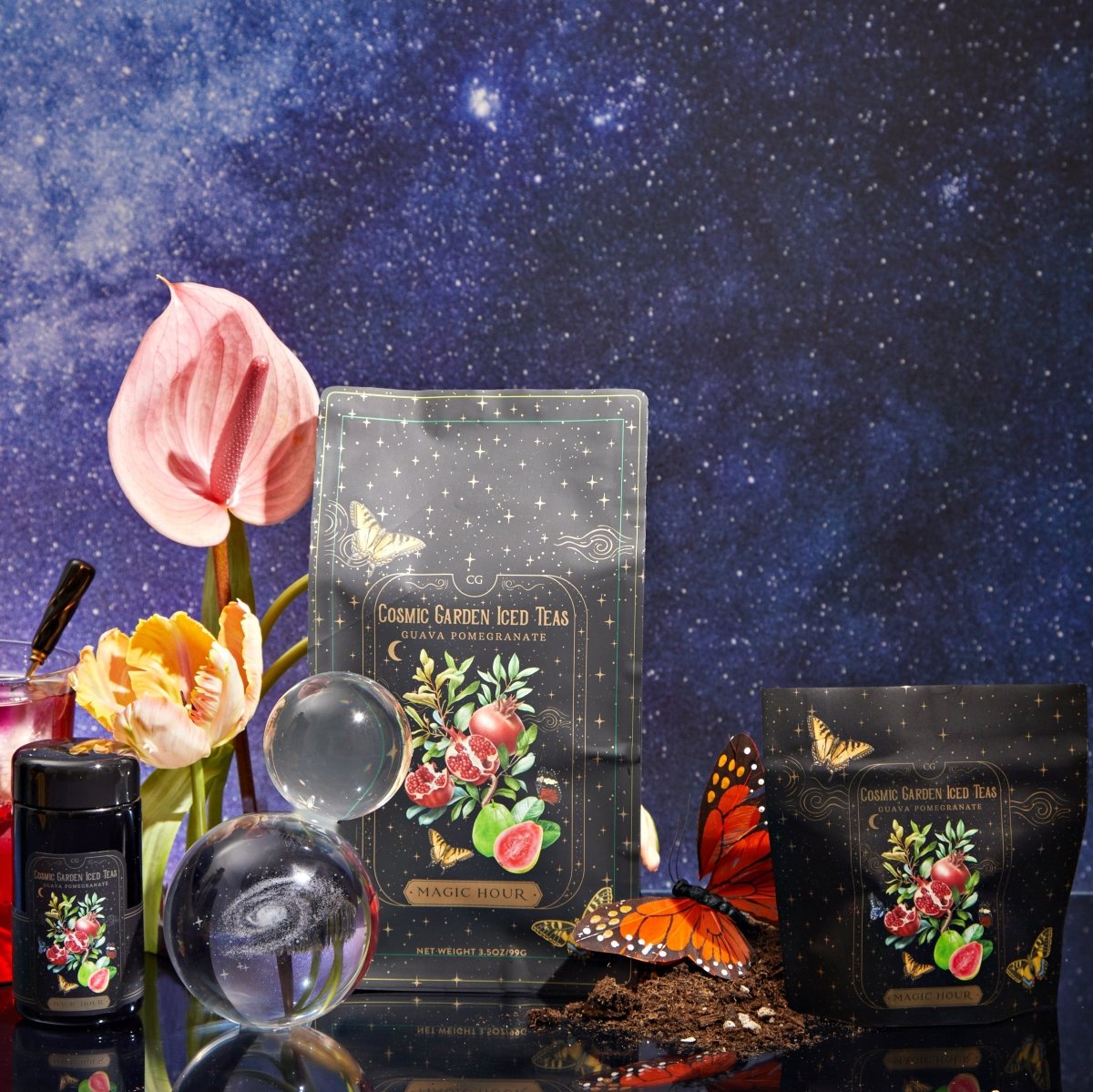
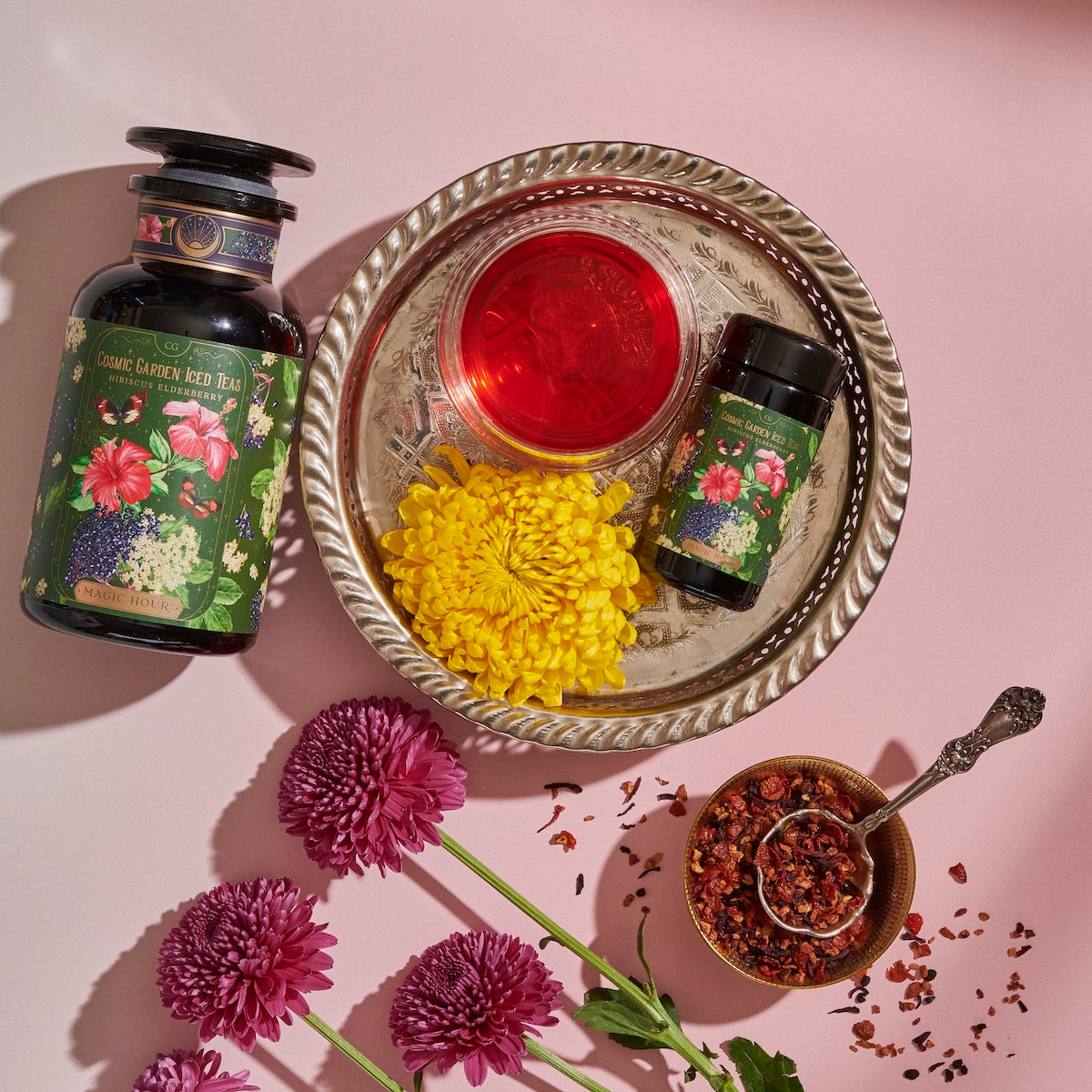
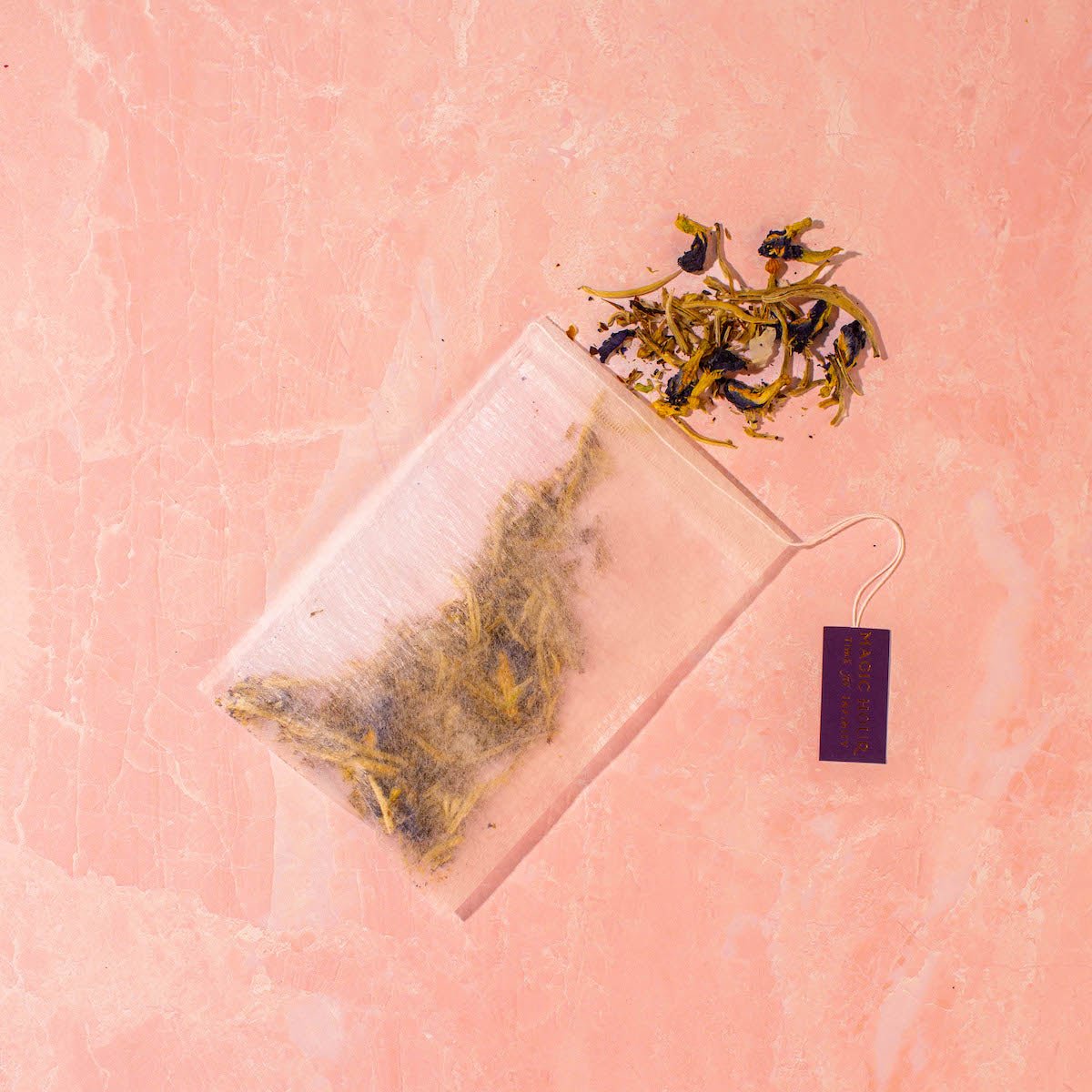
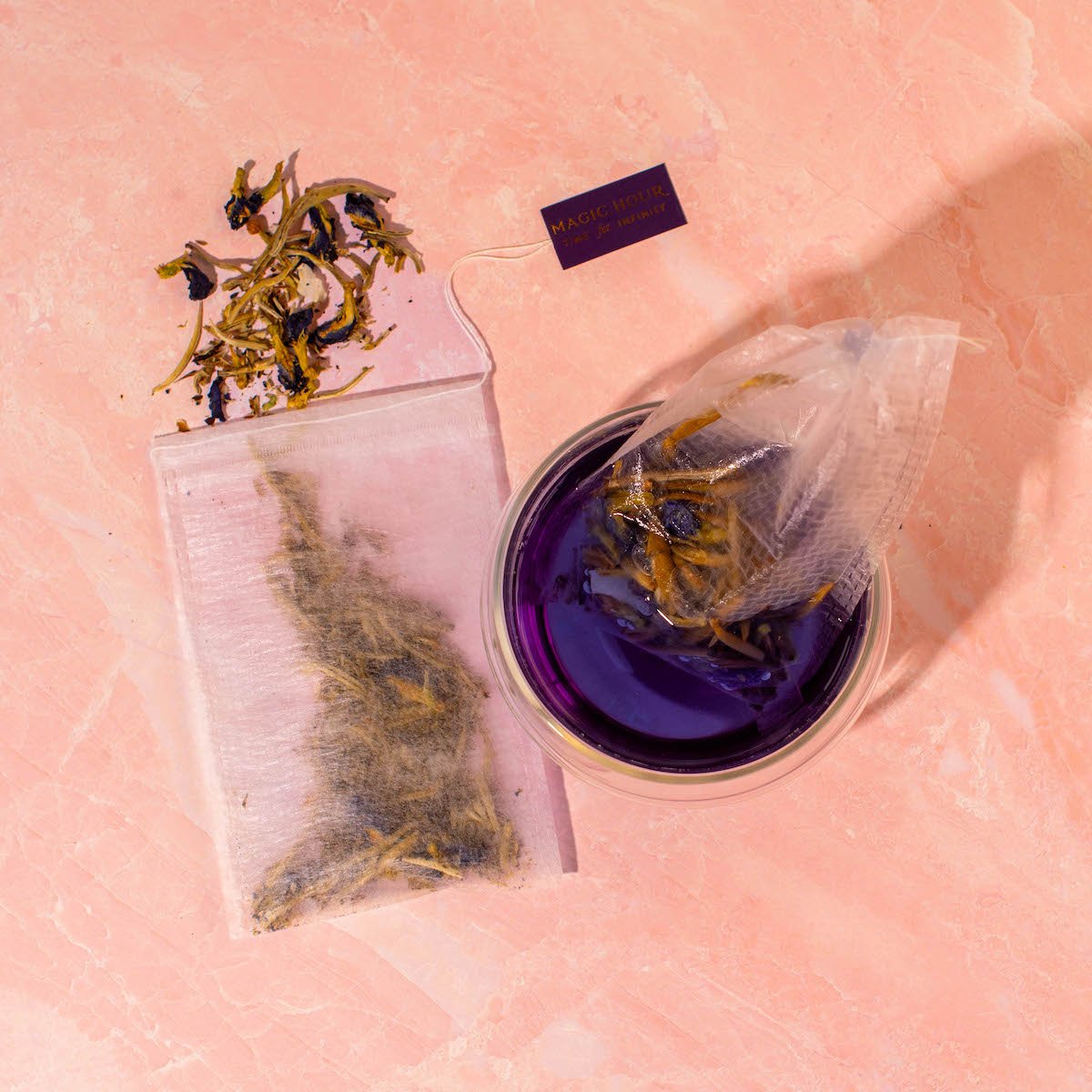
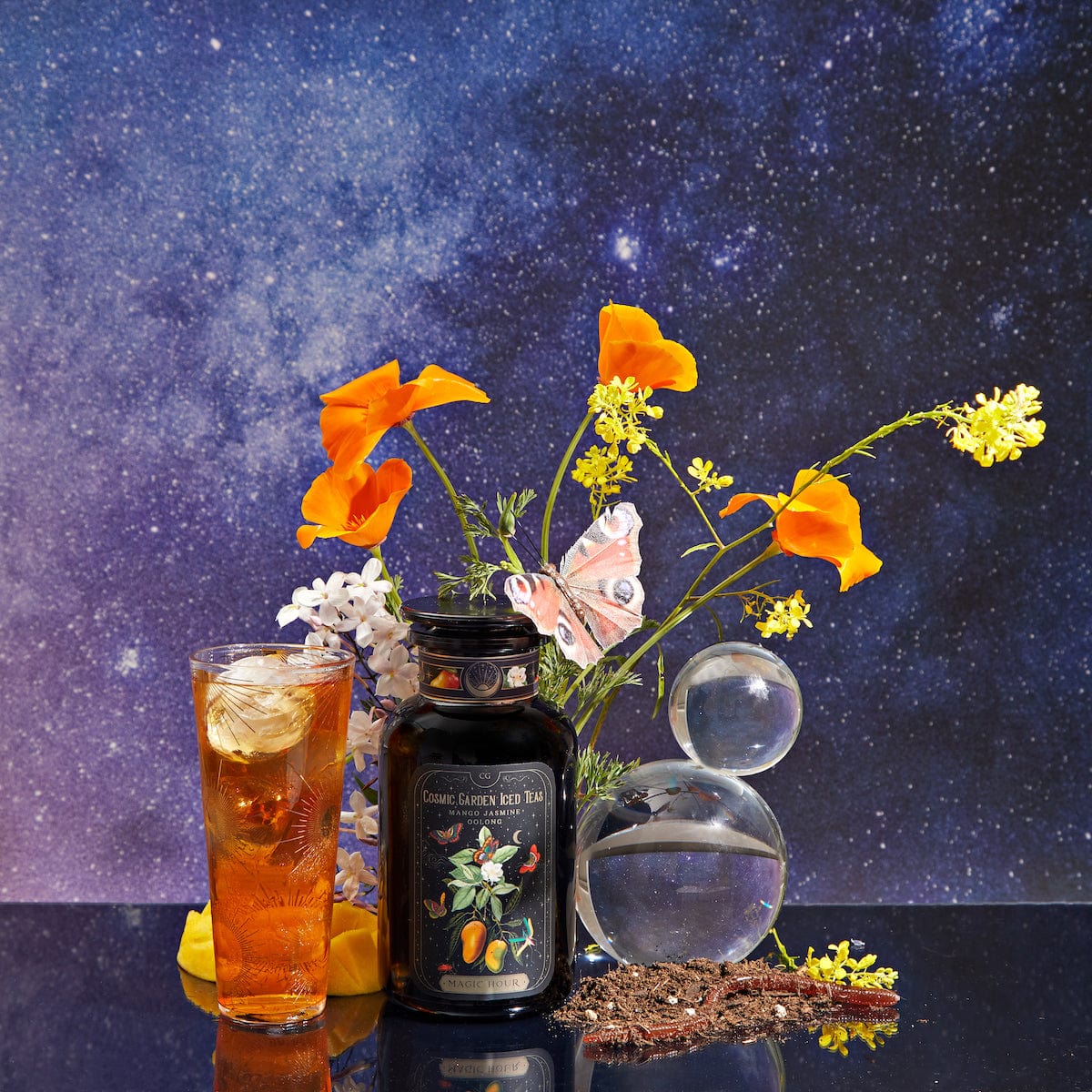
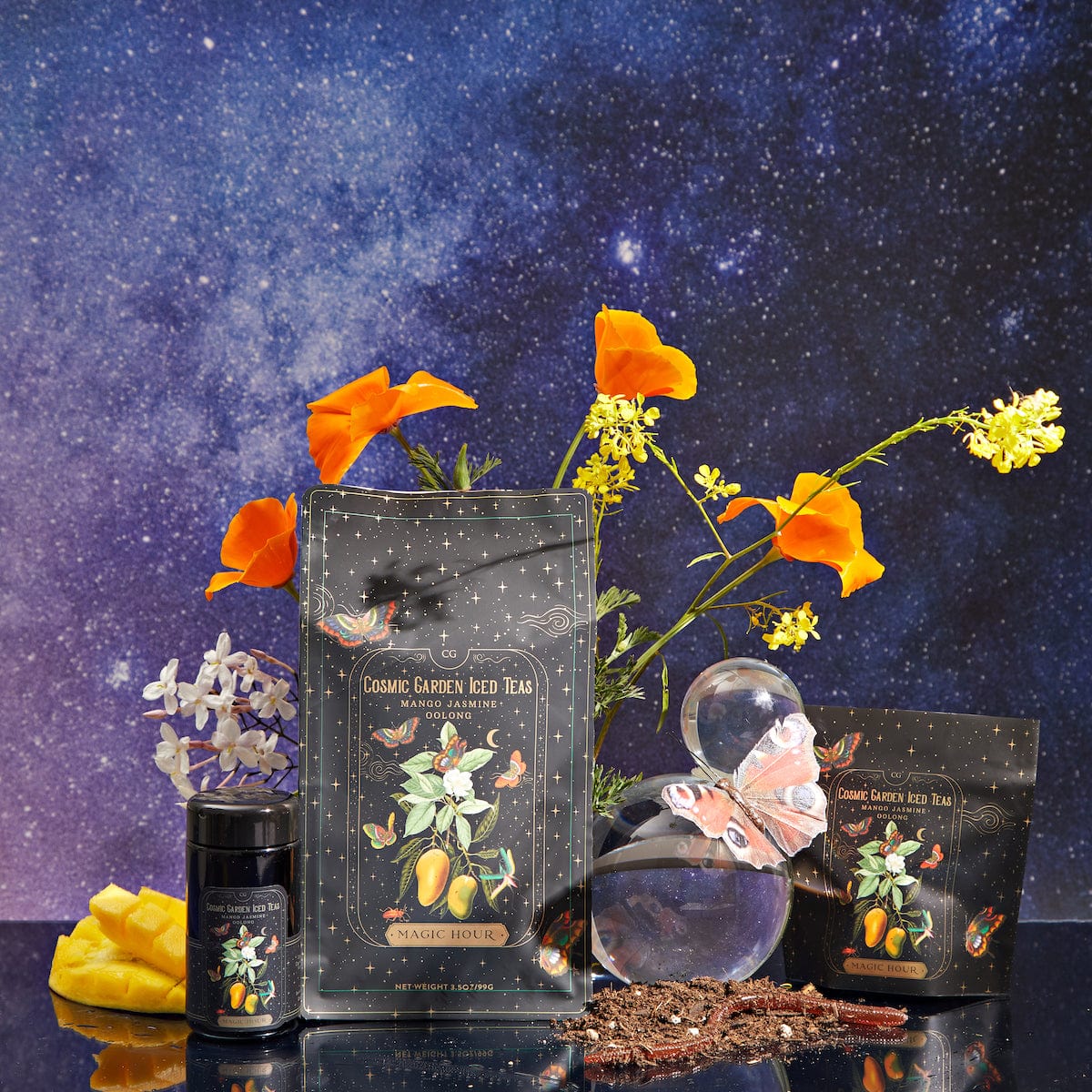
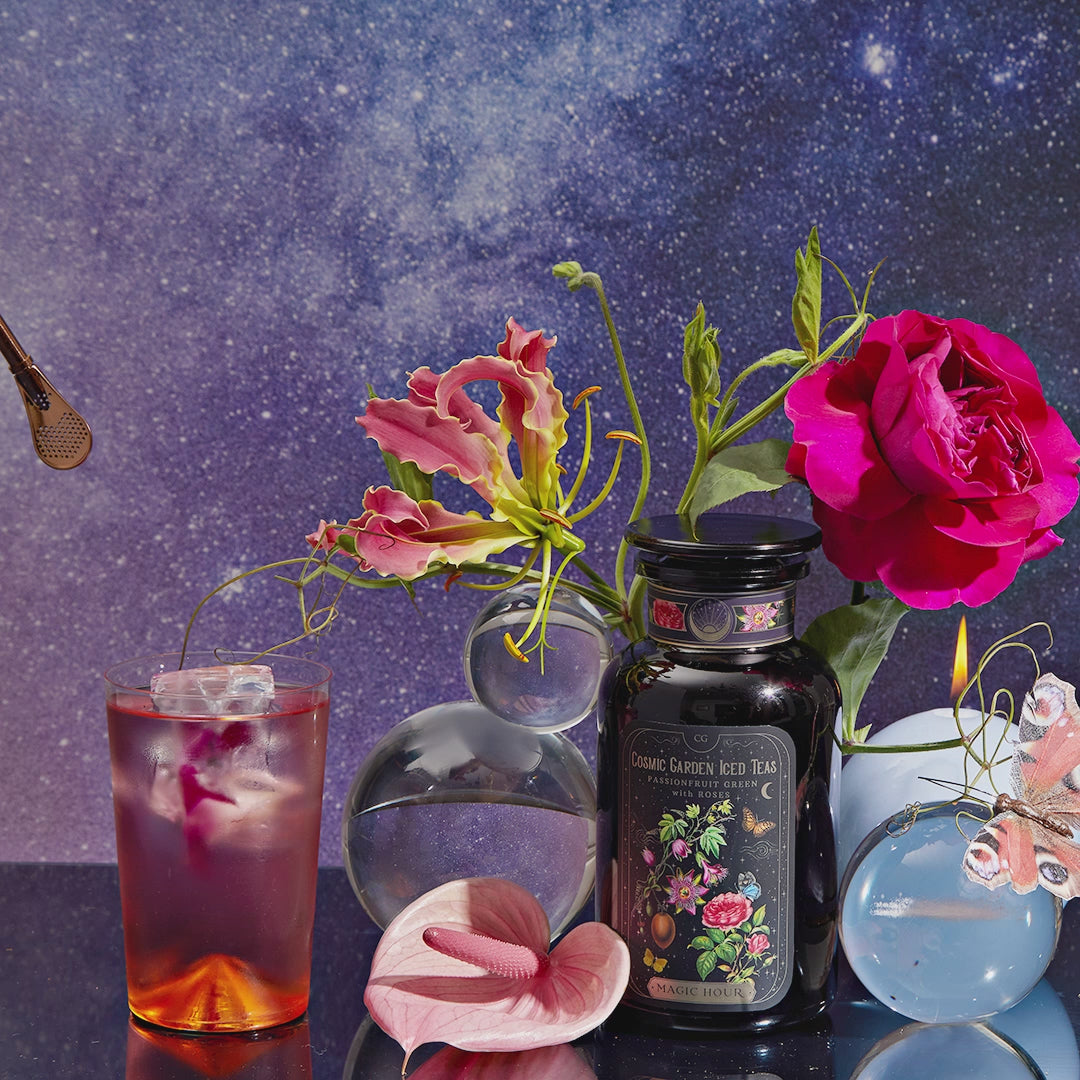
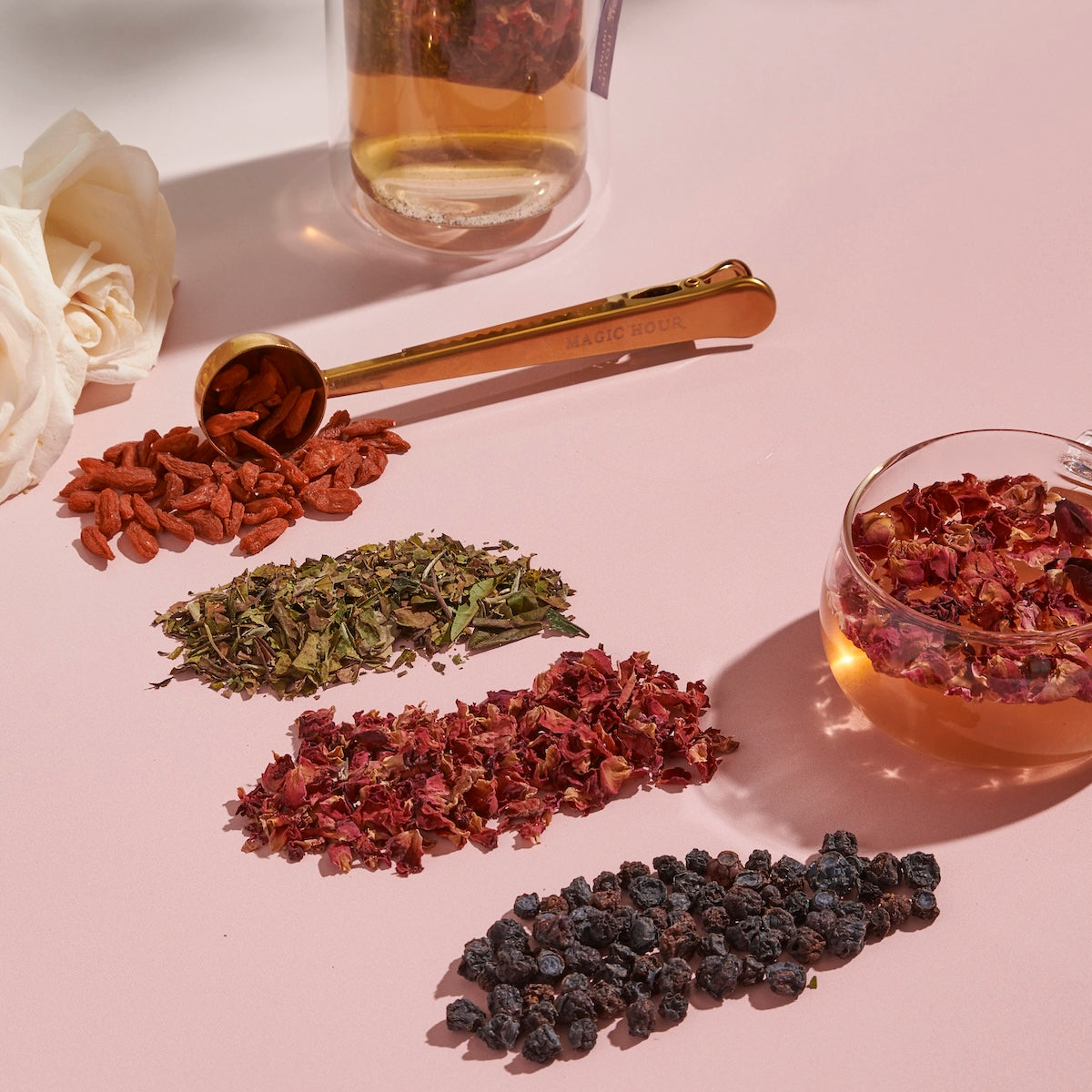
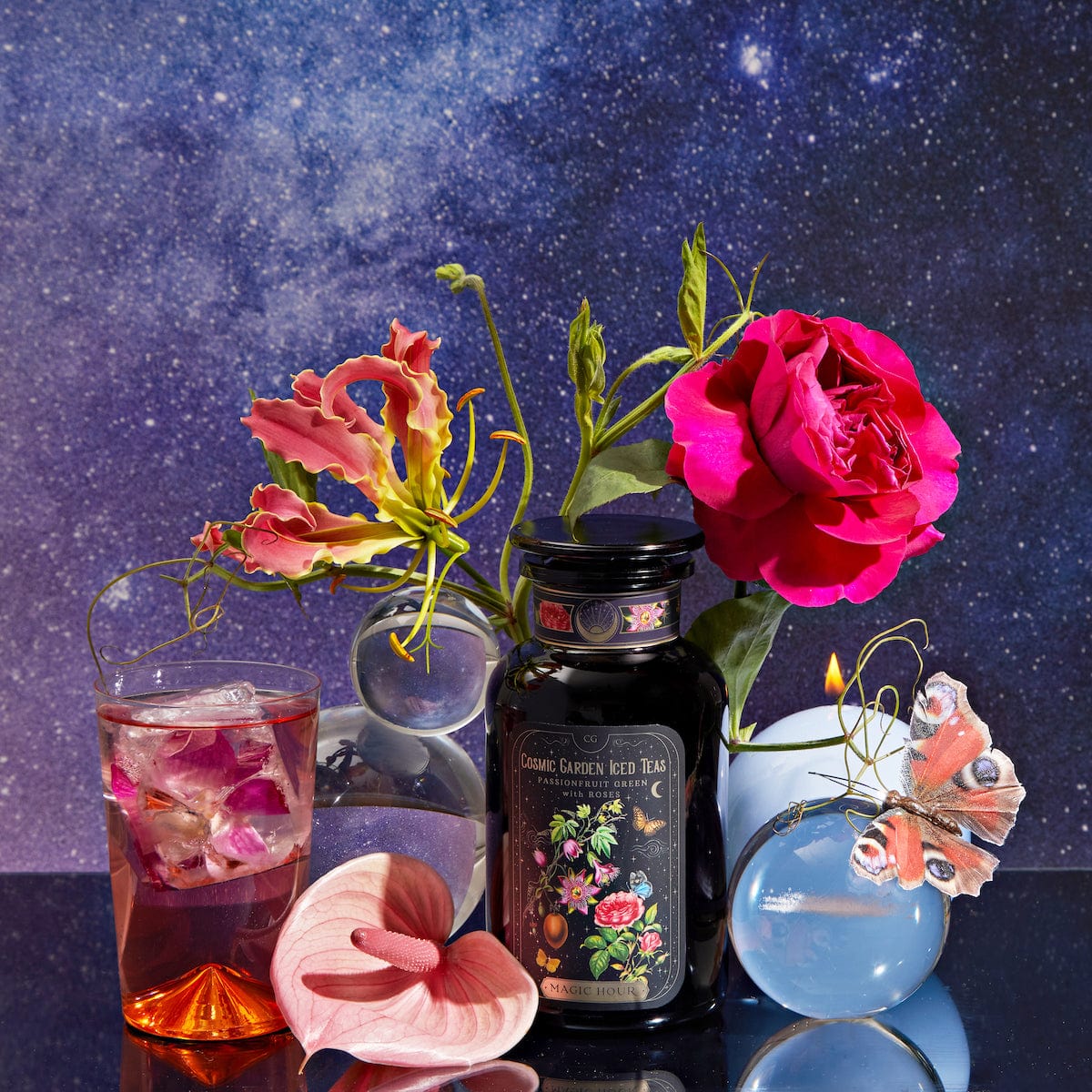
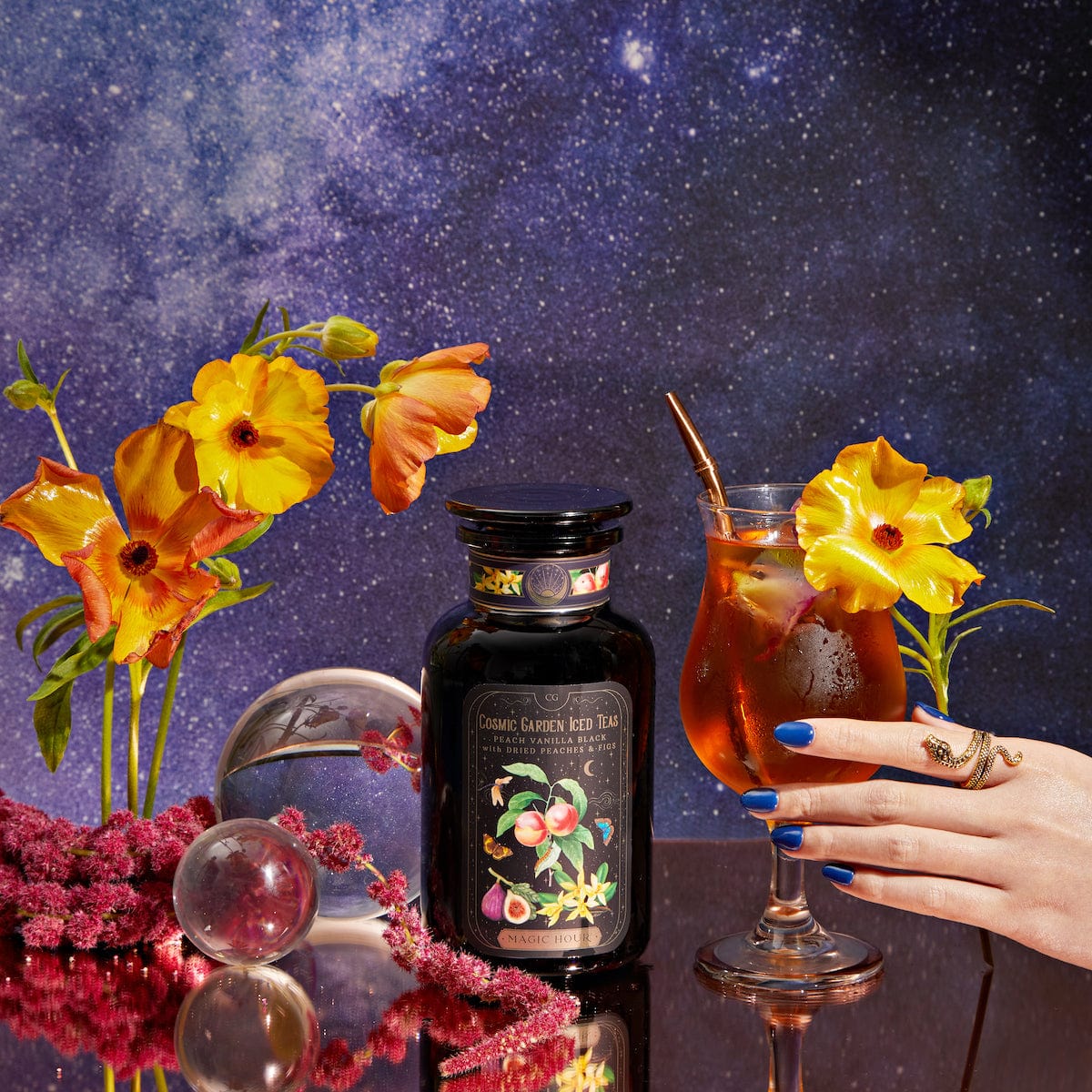
Summer rituals, glass apothecary jars, overnight infusions, slower extraction.
Why Cold-Steeped Tea Tastes Smoother and Feels Gentler, Backed by Research.
Why Certain Botanicals Shine in Cold Water
There is something almost alchemical about cold-steeped tea.
A jar resting overnight in the refrigerator. Delicate leaves and flowers slowly unfurling in cool water. The color deepening hour by hour into jewel tones of indigo, ruby, gold, and rose. By morning, the infusion feels softer, brighter, smoother somehow. Less sharp. More alive.
For centuries, tea has most often been prepared with heat. But modern research is beginning to reveal something fascinating: certain teas, flowers, fruits, and botanicals may actually preserve some of their most delicate compounds better through cold infusion than through boiling water.
At Magic Hour, our Cosmic Garden Iced Tea collection was created around this very idea. Not simply tea served cold, but teas intentionally crafted for slow cold extraction. Teas that reveal another dimension of themselves through patience, stillness, and the sacred pause.
Because true cold-steeping is not simply a summer beverage technique. It is a different ritual entirely.
Cold-Steeped Tea vs. Iced Tea
They Are Not the Same Thing
Most iced tea is brewed hot, then chilled.
Cold-steeped tea is different.
True cold-steeping means infusing tea slowly in cold filtered water over several hours, always refrigerated. This slower extraction changes not only the flavor of the tea, but the chemistry inside the cup itself.
Heat rapidly extracts tannins, caffeine, and bitter compounds. Cold water moves more gently. The result is often a tea that tastes smoother, softer, naturally sweeter, and less astringent.
Research comparing cold-brewed and hot-brewed tea has found that cold infusions consistently release fewer tannins, the compounds responsible for bitterness and dryness on the palate. This is one reason cold-steeped tea feels rounder and more velvety than the same tea brewed hot.
For many tea drinkers, especially those sensitive to bitterness or caffeine, cold-steeping creates a gentler experience while preserving the beauty and intelligence of the plants themselves.

Why Cold-Steeped Tea Tastes Smoother
The difference begins with tannins.
Tannins are naturally occurring polyphenols found in tea leaves. They contribute structure and complexity, but they are also responsible for the sharp, drying sensation many people associate with over-steeped tea.
Because tannins are less soluble in cold water, cold-steeped tea extracts fewer of them. The result is a low-tannin infusion with:
• less bitterness
• reduced astringency
• softer mouthfeel
• naturally smoother flavor
This slower extraction also tends to reduce caffeine levels compared to traditional hot brewing, creating a calmer and more spacious energy in the cup.
For those who love tea but sometimes find hot brews overstimulating, cold-steeping can feel remarkably balanced and easy to drink throughout the day.

The Plant Compounds That Prefer Cold Water
One of the most fascinating discoveries in tea science is that certain delicate botanical compounds are highly sensitive to heat.
Cold water helps preserve many of the vivid aromatics, pigments, and volatile oils that steam can carry away during hot brewing.
Anthocyanins
The Jewel-Toned Antioxidants
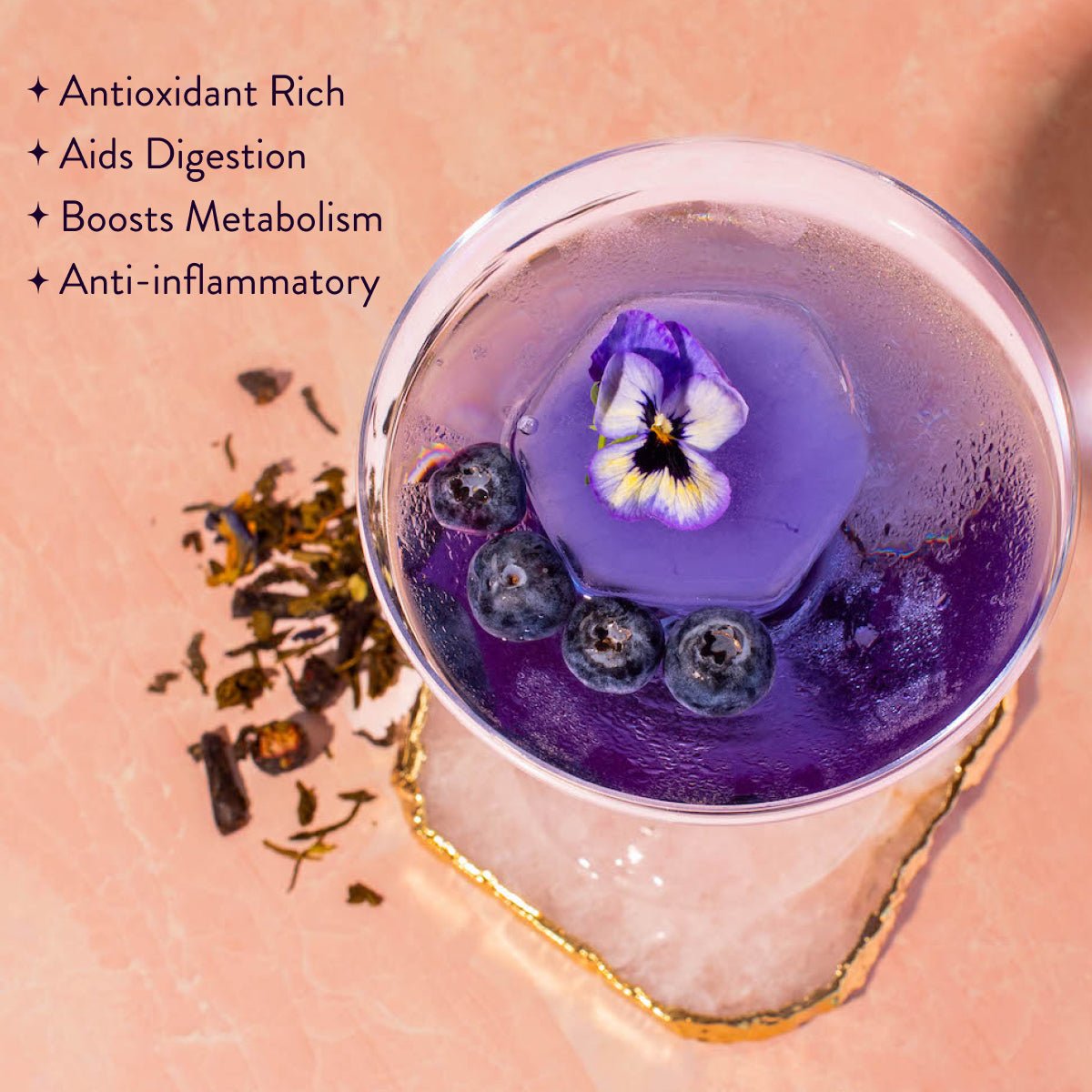
Anthocyanins are the natural pigment compounds responsible for blue, purple, crimson, and ruby hues in plants like butterfly pea flower, hibiscus, elderberry, and blueberries.
They are also among the most heat-sensitive plant compounds studied in botanical research.
Studies consistently show that anthocyanins degrade more rapidly as temperature rises. Cold infusion helps preserve both their vibrant color and their antioxidant activity.
These jewel-toned compounds are central to some of our most beloved Cosmic Garden blends:
• Butterfly Blue Coconut Cream
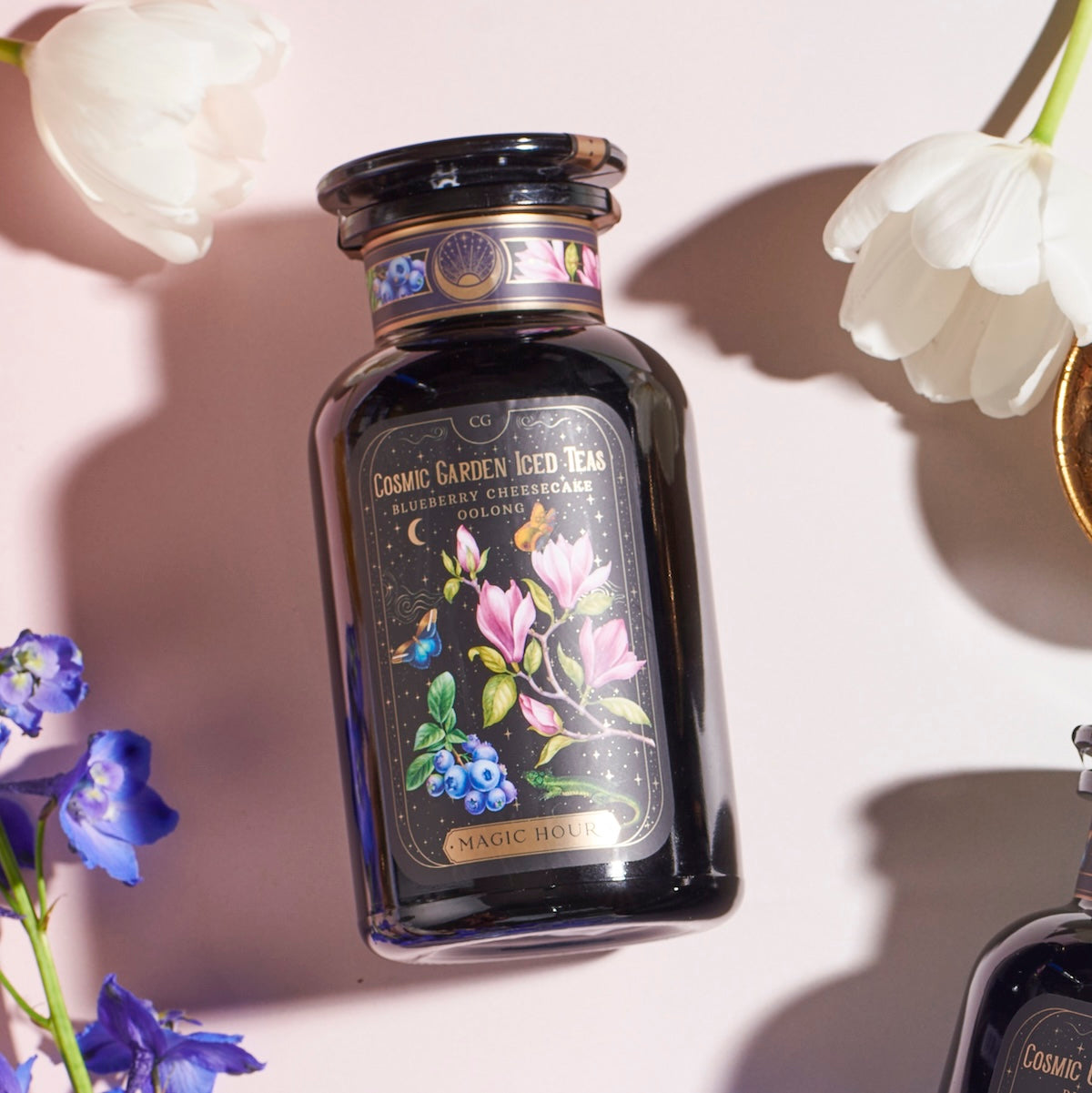
• Blueberry Cheesecake Oolong
• Strawberry Shortcake with Hibiscus
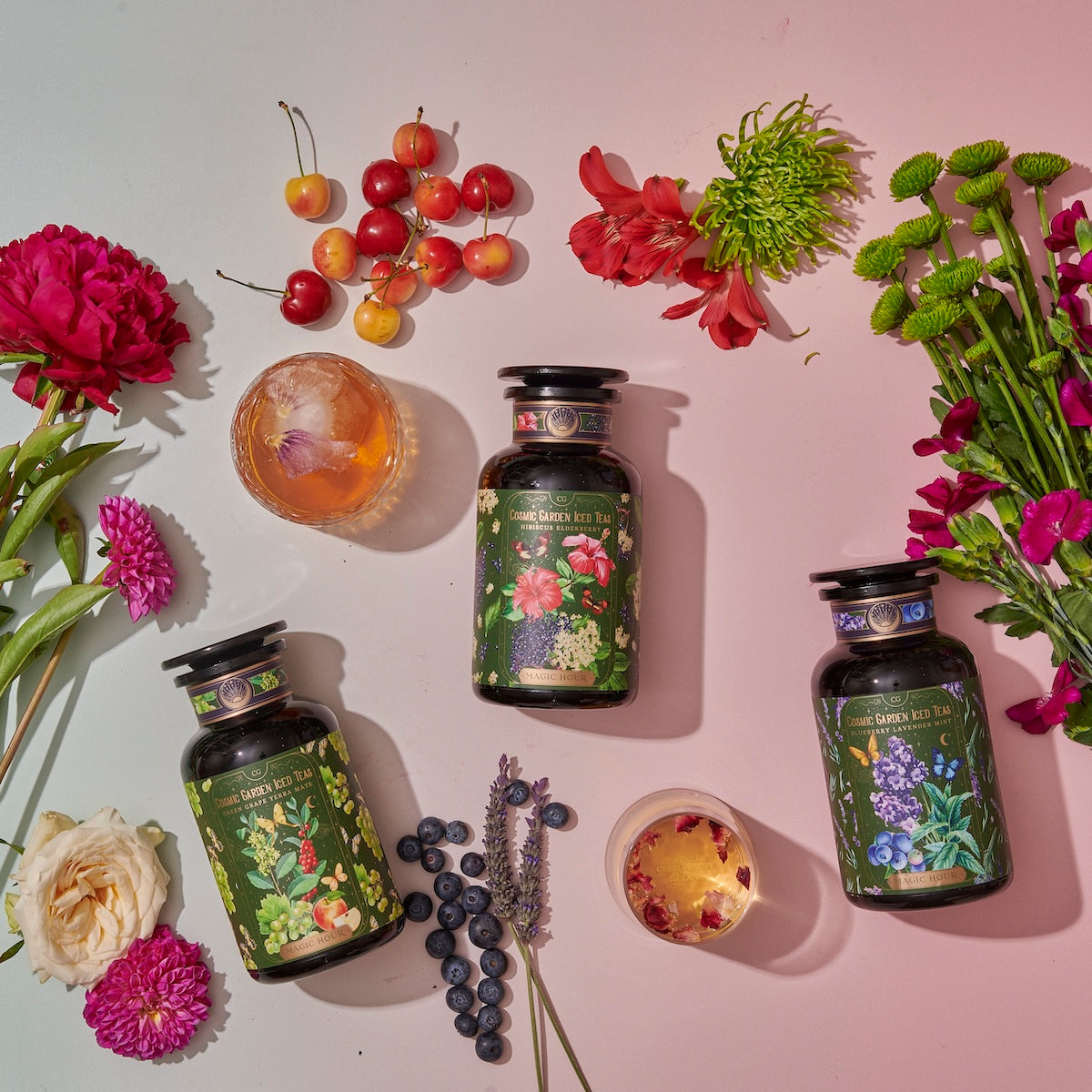
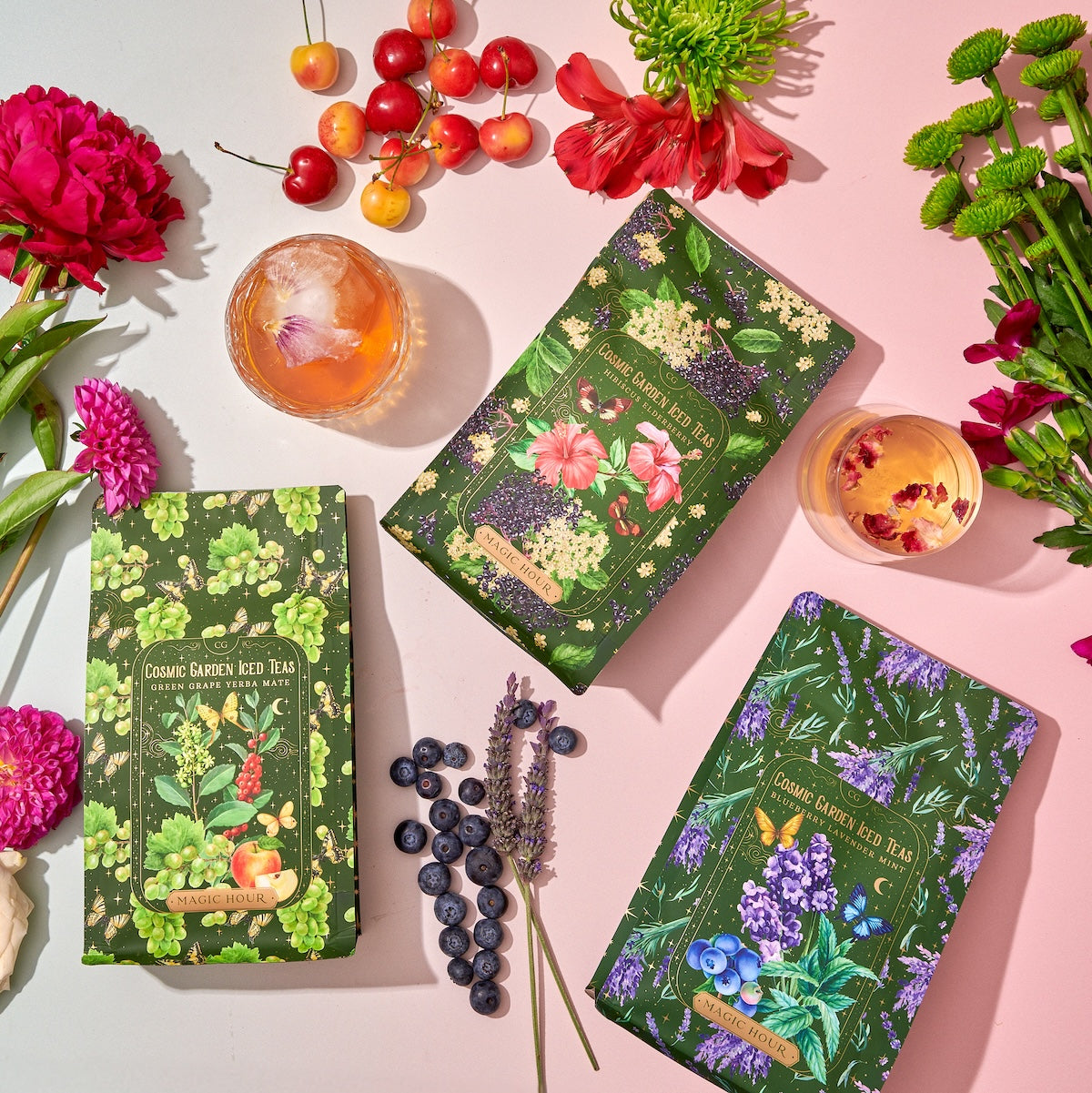
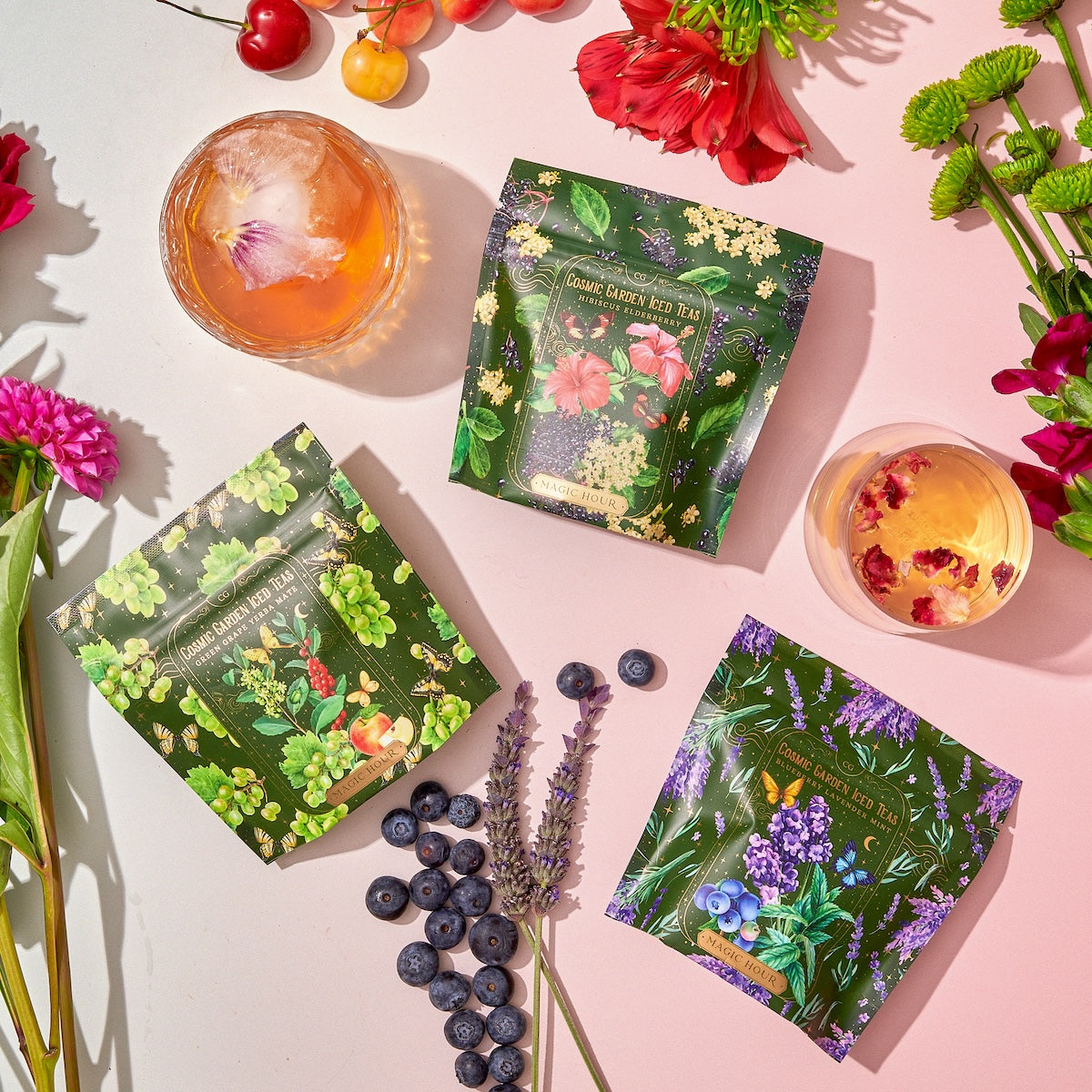
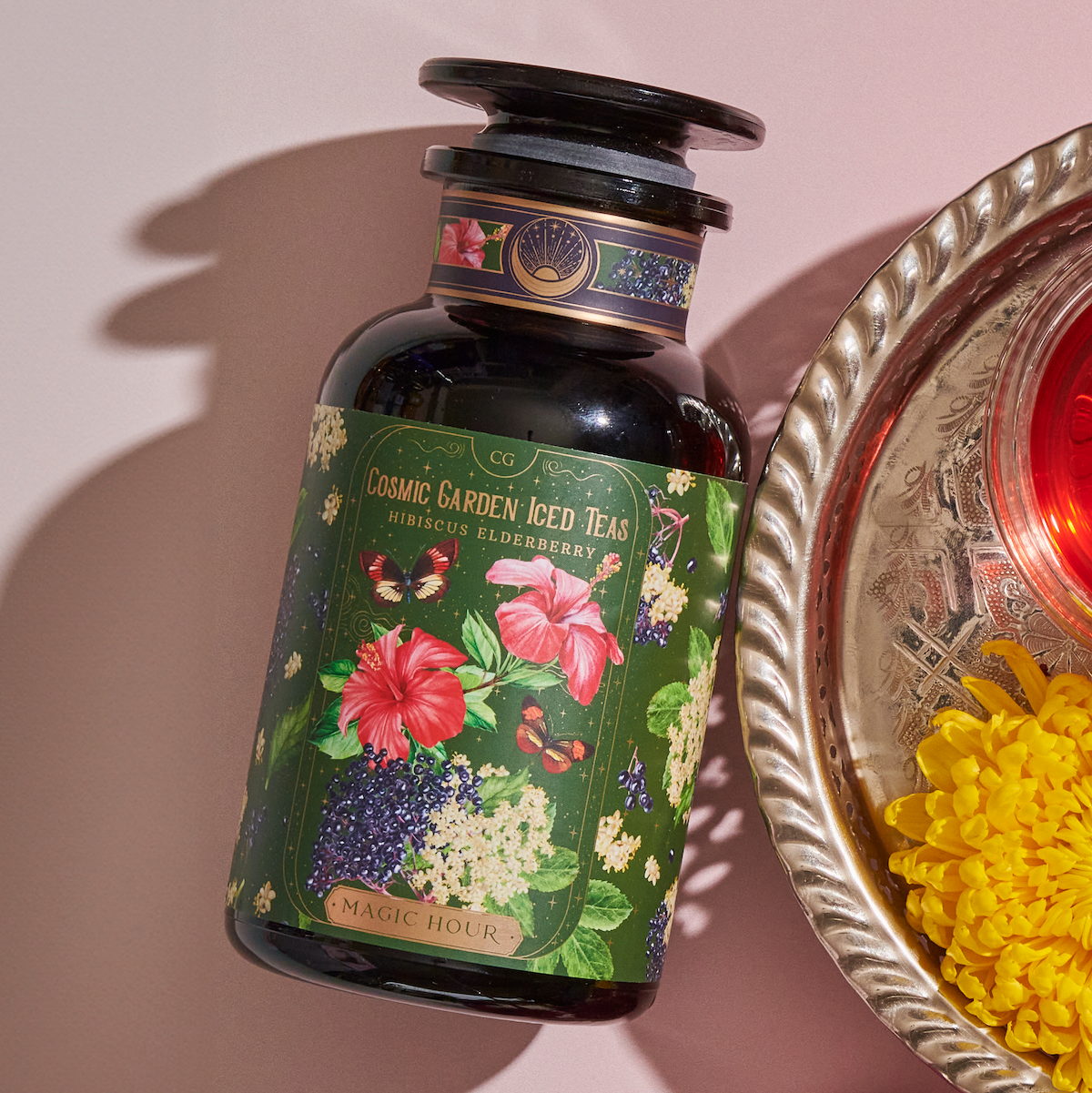
• Hibiscus Elderberry
When cold-steeped slowly, these teas retain their luminous color and vivid botanical brightness in a way hot water simply cannot replicate.
Aromatic Oils
The Soul of the Plant
Much of what we experience as flavor is actually aroma.
Lavender’s calming softness. Lemon myrtle’s sparkling citrus brightness. Fresh peach. Vanilla. Mint. Rose petals.
These delicate top notes come from volatile aromatic compounds that are easily released into steam during hot brewing.
Cold-steeping preserves more of these living aromatics inside the cup itself.
This is especially noticeable in blends like:
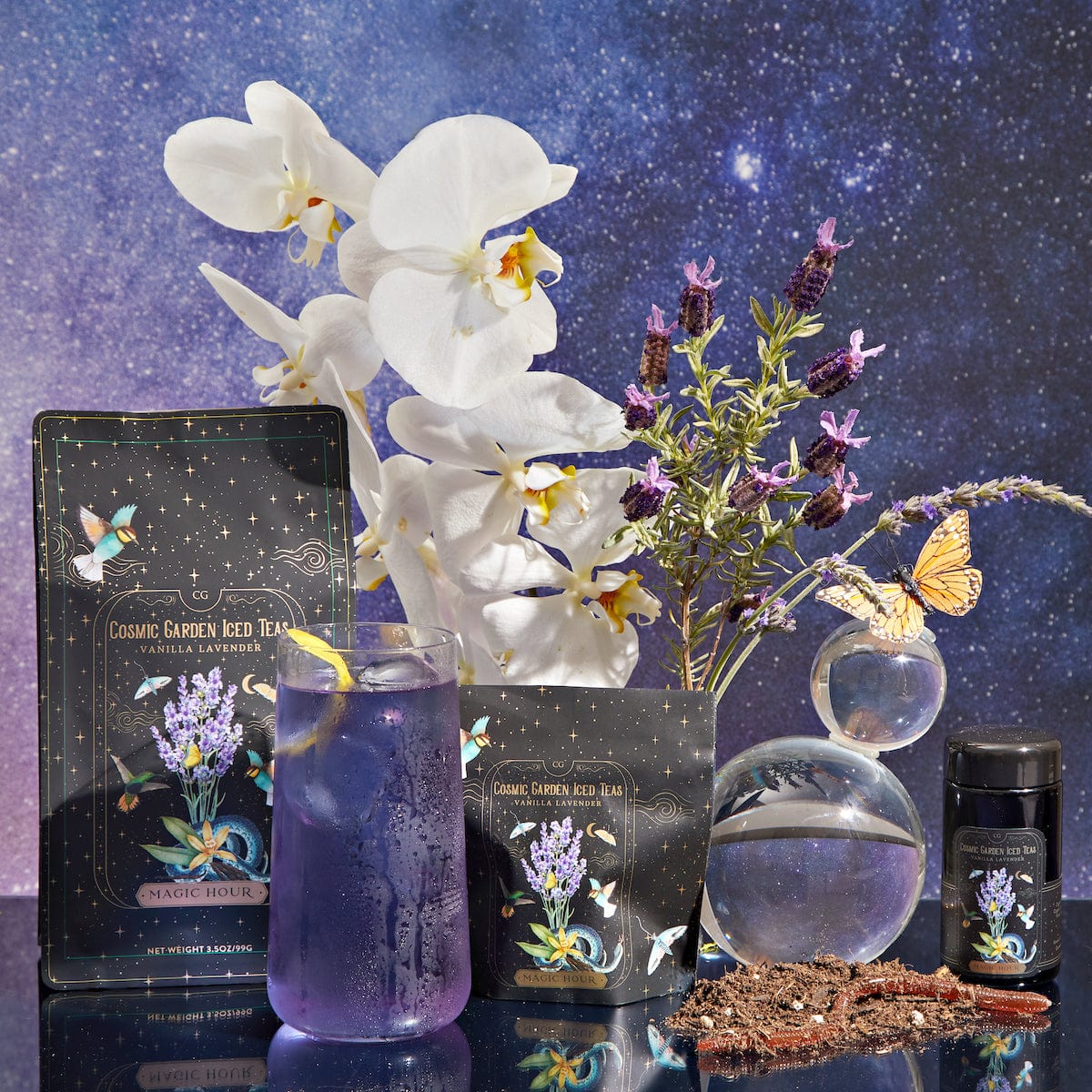
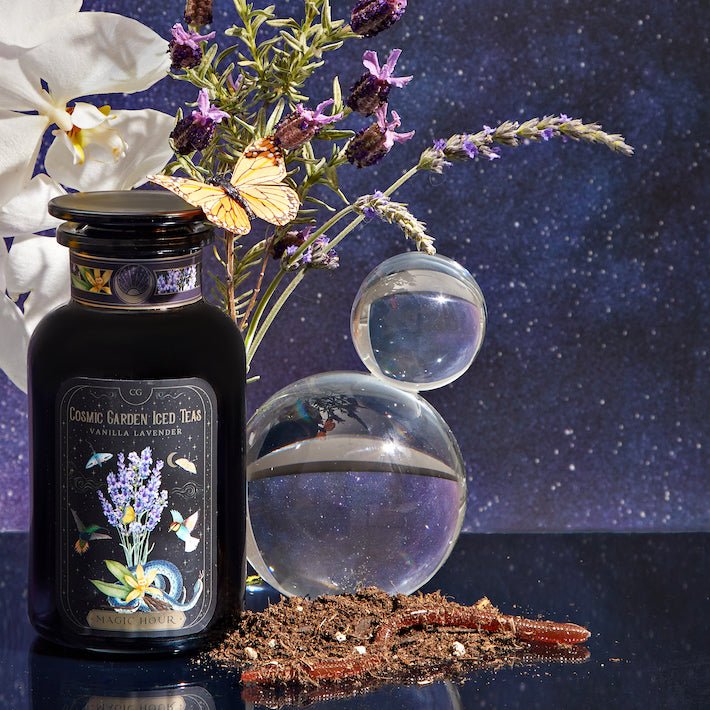
Vanilla Lavender
Cold infusion preserves lavender’s naturally occurring linalool, the aromatic terpene associated with lavender’s calming character.
Lemon Meringue Puerh
Cold-steeping protects the vivid citrus aromatics of lemon peel and lemon myrtle, including citral and limonene, compounds that readily dissipate with heat.
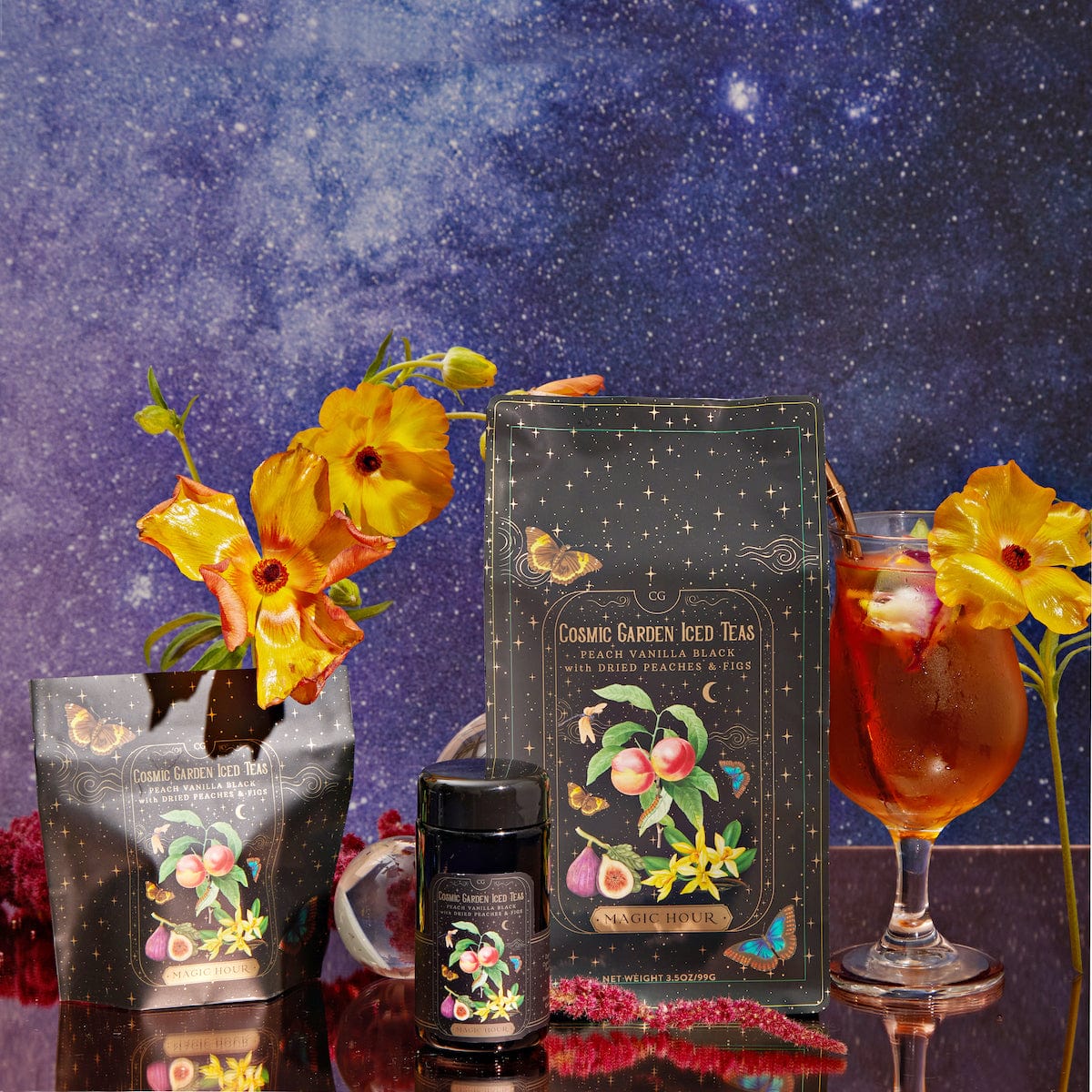
Peach Vanilla Black
The delicate fruit aromatics responsible for peach’s lush scent remain brighter and softer through cold extraction.
The result is a tea experience that feels more dimensional, fragrant, and alive.

Green Tea Catechins + Theanine
A Different Kind of Energy
One of the most clinically intriguing areas of cold-steep research involves green tea.
Research on cold-brewed Sencha has shown that cold water shifts the catechin profile of tea itself. Cold extraction appears to favor compounds like EGC and theanine while reducing the extraction of EGCG and caffeine.
Why does this matter?
Theanine is the amino acid associated with tea’s calm, focused feeling. EGC has been studied for immune-supportive properties. Some researchers suggest that lower-temperature brewing may help preserve the balance of these compounds in a way that feels gentler and less stimulating.
This is part of why cold-steeped green and white teas often feel smooth, clear, and quietly energizing rather than sharp or jittery.
Blends that particularly benefit from this slower extraction include:
• Blueberry Cheesecake Oolong
• Butterfly Blue Coconut Cream
• Strawberry Shortcake with Hibiscus

The Cosmic Garden Collection
Crafted for Cold-Steeping
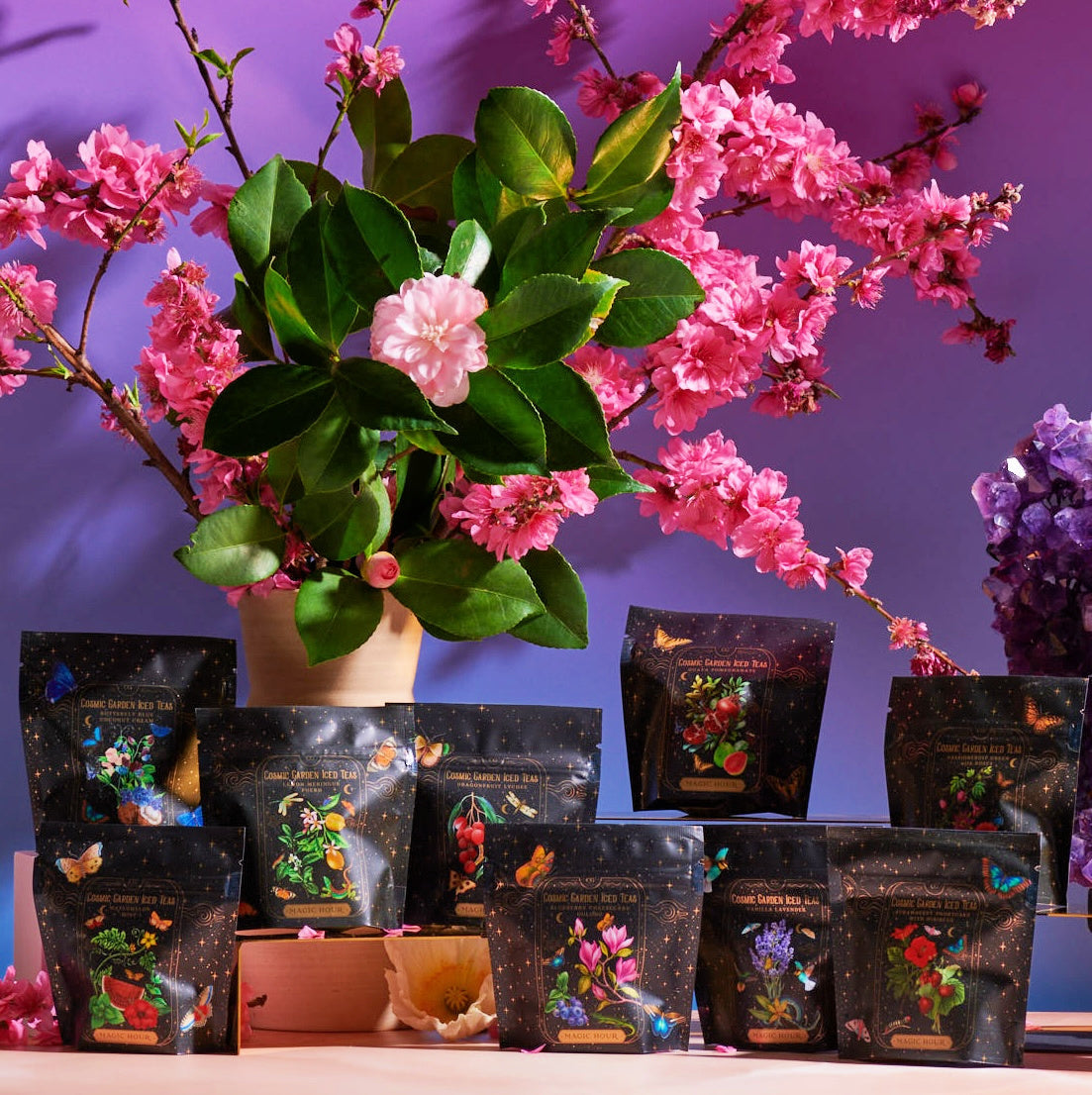
Every blend in our Cosmic Garden collection tells a different cold-steep story.
Butterfly Blue Coconut Cream
Perhaps the strongest cold-steep expression in the collection. Butterfly pea flower’s anthocyanins remain more stable in cool water, while delicate coconut and vanilla aromatics stay creamy and luminous rather than evaporating away.
Blueberry Cheesecake Oolong
A layered blend of Sencha green tea, oolong, blueberries, butterfly pea flower, and vanilla designed to showcase both cold-steep catechin preservation and vibrant anthocyanin color.
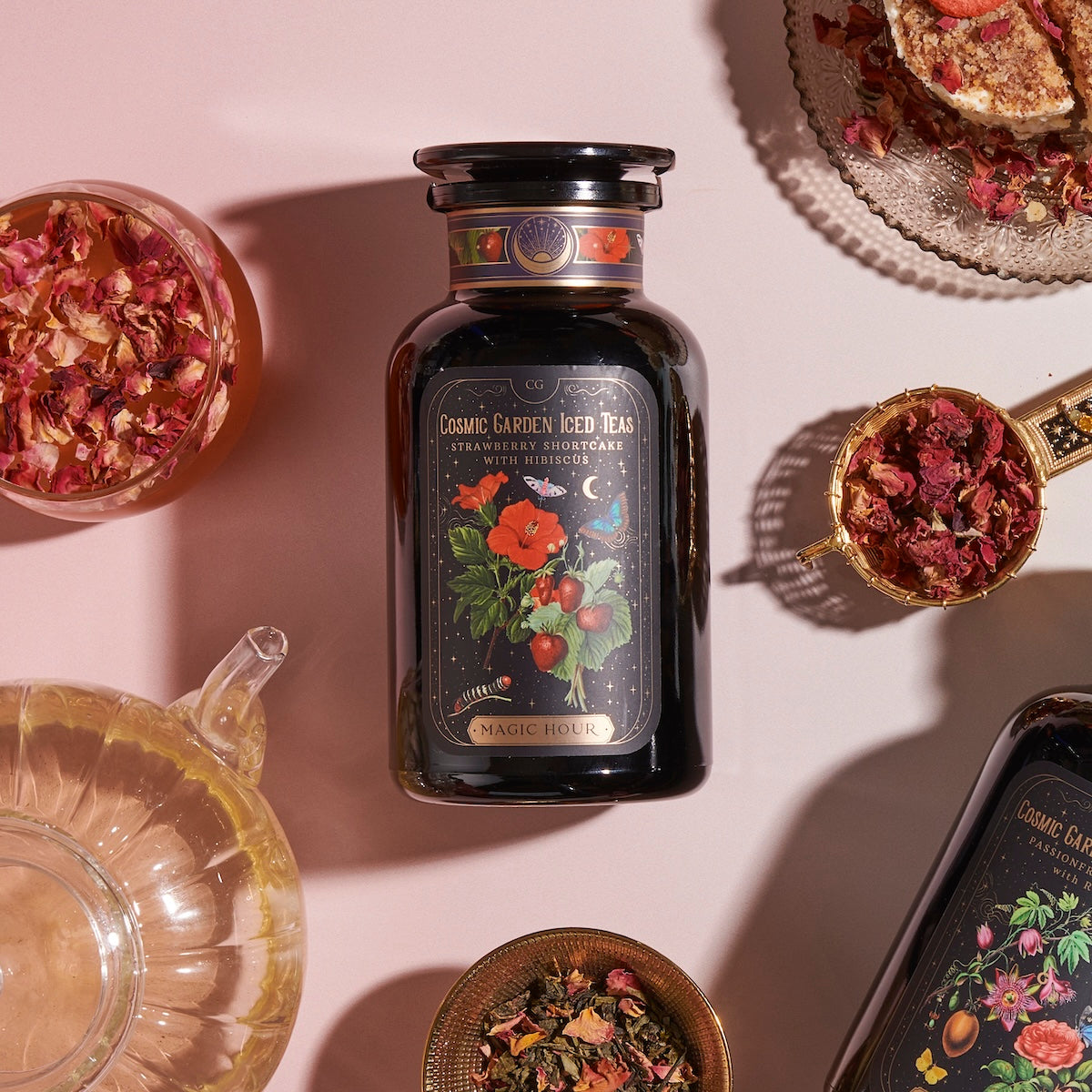
Strawberry Shortcake with Hibiscus
Hibiscus and white tea become especially radiant through cold infusion, preserving vitamin C, vivid ruby color, and bright berry notes.
Hibiscus Elderberry
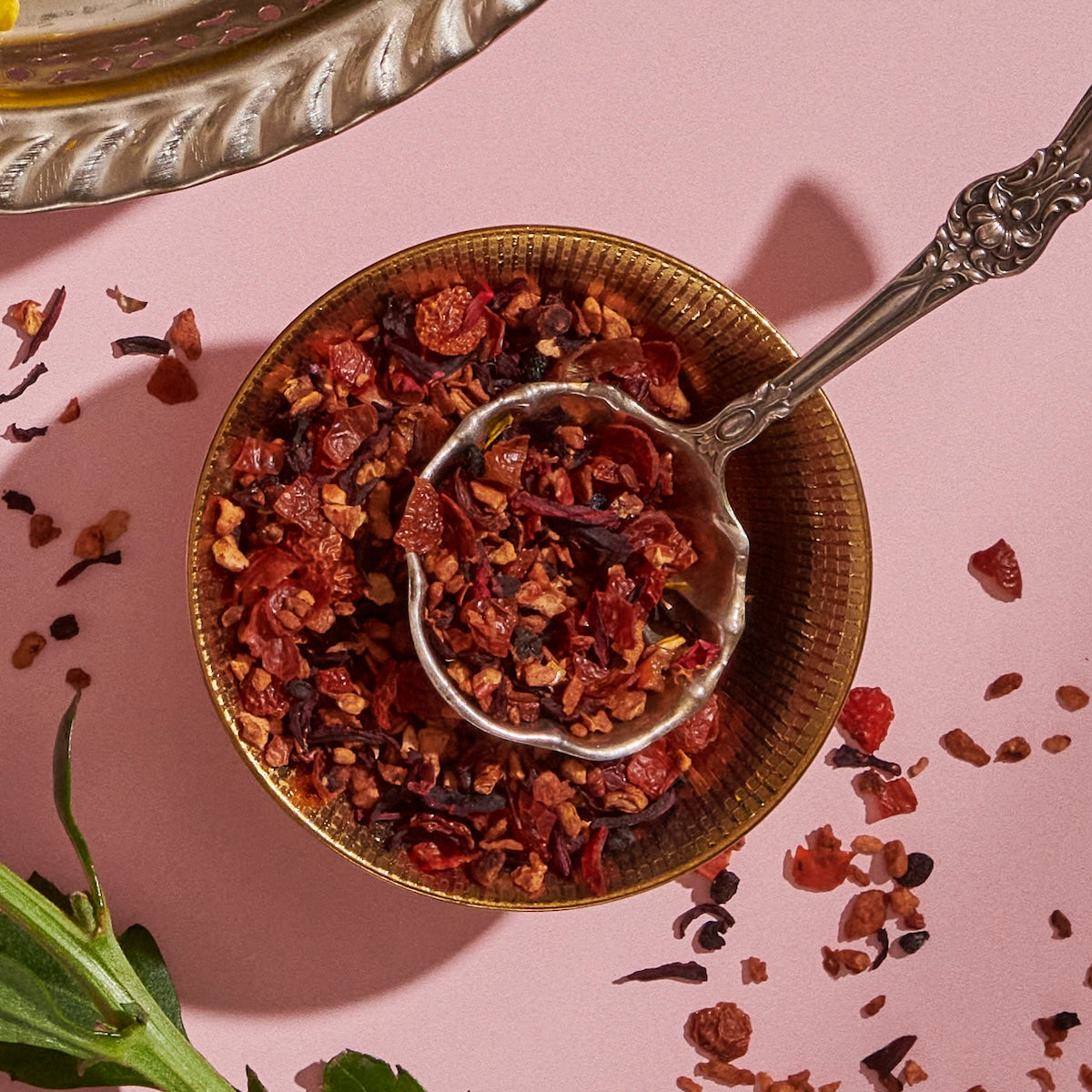
Rich in anthocyanins from hibiscus and elderberry, with rosehips contributing naturally occurring vitamin C. Cold-steeping helps protect the very compounds most sensitive to heat.
Vanilla Lavender
An aromatic tea where the beauty lies in preserving lavender’s calming floral oils and soft vanilla top notes.
Lemon Meringue Puerh
Cold-steeping reveals the bright citrus oils of lemon myrtle and peel while softening the deeper fermented puerh base.
Peach Vanilla Black with Figs
A lush, nostalgic black tea blend where cold infusion keeps peach aromatics vivid and the finish smooth and low-tannin.

How to Cold-Steep Tea Properly
True cold-steeping is simple, but a few small details matter.
Our Favorite Ritual
- Add tea to a glass jar or apothecary vessel
- Fill with cold filtered water
- Seal and refrigerate
- Steep for 4–12 hours
- Strain and serve over ice
For a lighter infusion, 1–2 hours creates a refreshing quick steep. For deeper botanical extraction and fuller flavor, overnight steeping is ideal.
Always steep refrigerated in a sealed container for freshness and food safety.
A Slower Way of Drinking Tea
Cold-steeping invites patience.
It asks us to prepare something now for the version of ourselves who will arrive later. To slow down enough to let the plants unfold gently in their own timing.
Perhaps that is part of why cold-steeped tea feels so different.
Not only because the chemistry changes.
Because we do.
At Magic Hour, we believe tea is more than a beverage. It is a 6,000-year-old plant ally. A ritual of returning to yourself. A sacred pause inside modern life.
And sometimes, the gentlest extraction reveals the deepest beauty.
Explore the Cosmic Garden Iced Tea Collection and discover the original spirit of tea, crafted fresh to order for luminous summer rituals.