Menopause can change your day's rhythm in surprisingly different ways. A sudden wave of heat may interrupt a meeting. A restless night makes the morning feel blurred and depleted. Stress may feel louder, while energy arrives less predictably than you’re used to.
Tea offers a gentle, repeatable ritual: a cooling cup when the temperature rises, a caffeine-free infusion before bed, or an intentional pause when the nervous system needs room to exhale.
The best teas for menopause depend on the support you are seeking. People often choose sage and red clover for hot flashes; chamomile, passionflower, lemon balm, and lavender suit an evening wind-down; ashwagandha, tulsi, and mint often appear in calming blends; and green tea, ginger, peppermint, and rosemary can make a brighter daytime cup.
Menopause is only one chapter in the body’s changing story. For a broader look at botanicals used throughout different stages of women’s wellness, explore our guide to hormone balance teas.
Why tea can be a meaningful menopause ritual
Perimenopause and menopause are not single-symptom experiences. Changing hormone levels can coincide with hot flashes, night sweats, disrupted sleep, mood changes, and shifts in concentration or energy. Hot flashes alone affect up to 80% of women and can continue for years, according to The Menopause Society.
That does not mean one tea, or one herb, will answer every need. It is more useful to choose a blend according to the moment:
-
a refreshing or cooling infusion when warmth rises;
-
a caffeine-free blend when sleep feels distant;
-
an aromatic calming tea when the day feels overstimulating;
-
or a lightly caffeinated blend when the morning needs a gentle beginning.
The ritual itself matters, too. Preparing tea asks you to stop, wait, breathe in its aroma, and notice what you need. During a season defined by change, that small moment of attention can become an anchor.
Begin with the teas and herbs you already know
A supportive tea ritual does not have to begin with a specialized formula. If your cupboard already holds a few simple teas, you can start by noticing which ones suit different parts of your day.
-
Chamomile or lemon balm in the evening: Both are caffeine-free and naturally at home in a wind-down ritual. Brew one on its own, or combine the two for a soft, familiar cup before bed.
-
Peppermint or spearmint when you want something refreshing: Their cooling flavor can feel especially welcome when a hot drink seems unappealing. Prepare them over ice if that feels better in your body.
-
Green tea in the morning: A lightly steeped green tea offers caffeine for days when energy feels slow to arrive. Keep it earlier in the day if caffeine makes sleep more fragile.
-
Ginger when you want warmth without heaviness: Fresh ginger creates a bright, grounding infusion. It can be combined with peppermint or lemon, depending on whether you want the cup to feel warmer or more refreshing.
-
Sage as an occasional herbal infusion: Sage is often associated with menopause tea, but “more” is not necessarily better. Use products intended for drinking, follow their preparation directions, and check with a clinician or pharmacist if you take medication or have a relevant health condition.
These simple options also help you learn what you genuinely enjoy. A beautifully formulated blend is only useful if its flavor, caffeine level, and ritual fit your life.
Teas for hot flashes and night sweats
Hot flashes, also called vasomotor symptoms, are sudden sensations of heat that may be accompanied by sweating, flushing, chills, anxiety, or a faster heartbeat. When they occur during sleep, they are usually called night sweats.
Sage and red clover are among the herbs commonly associated with menopause blends. When your internal thermostat seems to have a rhythm of its own, Divine Timing Balance offers a cooling ritual for meeting the moment with greater ease. Sage leaf, spearmint, lemon verbena, and chrysanthemum give the blend a fresh, graceful character, while red clover, dong quai, and shatavari draw on a long tradition of botanicals used in women’s wellness.
Try it warm when you want the comfort of a traditional tea ritual, or steep it ahead and chill it for a cooling afternoon infusion. If hot drinks seem to trigger warmth for you, iced tea may simply feel better.

Teas for stress and inner steadiness
Menopause does not occur in isolation from the rest of life. Work, caregiving, disrupted sleep, and physical symptoms can overlap, leaving less space to recover from everyday stress.
Herbs such as lemon balm, tulsi, spearmint, rose, and ashwagandha have long histories of use in relaxing or adaptogenic blends. “Adaptogen” is a wellness term for certain botanicals traditionally used to help the body respond to stress; it should not be read as a promise that an herb will correct hormones or treat anxiety.
Divine Timing Calm combines shatavari, spearmint, ashwagandha, milk thistle, lemon balm, dandelion root, rhodiola, reishi, tulsi, rose, peppermint, cardamom, and mucuna. The mint and cardamom give the blend an uplifting freshness, while its caffeine-free base makes it easy to place in the afternoon or evening.
Interestingly, in our internal study of 16 participants, 80% of participants reported lower stress after drinking the Divine Timing Calm Magic Hour tea after 30 days of single use.*
For example, one of the participants said: “Full day of travel from Michigan to North Carolina. Busy highways, crazy cold weather, and bad roads, to busy airports. Cool and calm the whole way!”
Make the cup part of an actual pause. Put the phone in another room. Let the tea steep fully. Take five unhurried breaths before the first sip. The herbs may be the reason you chose the blend, but the ritual is what ensures you have made space to slow down.
For more calming botanicals and blends beyond the Divine Timing collection, read Magic Hour’s guide to organic teas for stress and relaxation.
Teas for sleep during menopause
Sleep can become more fragile during perimenopause and menopause. Night sweats may wake you, stress can keep your mind active, and a poor night's sleep can make the next day feel even more demanding.
For bedtime, begin with a caffeine-free blend. Chamomile, passionflower, lavender, lemon balm, and oat straw are familiar evening herbs because their flavors and aromas naturally suit winding down.
Divine Timing Rest layers those botanicals with shatavari, ashwagandha, rose, lemon myrtle, and magnolia bark. It is the most natural choice in the collection for a quiet pre-sleep ritual.
Steep a cup 30 to 60 minutes before bed and pair it with cues that tell the body the day is closing: lower the lights, step away from work, and let the cup replace one last scroll.
You can also explore Magic Hour’s broader guide to the best teas for better sleep, including bedtime ingredients and ways to build a more restful evening ritual.

Teas for energy and mental clarity
Not every menopause tea needs to be sedating. Some mornings call for movement, warmth, and a cleaner sense of momentum.
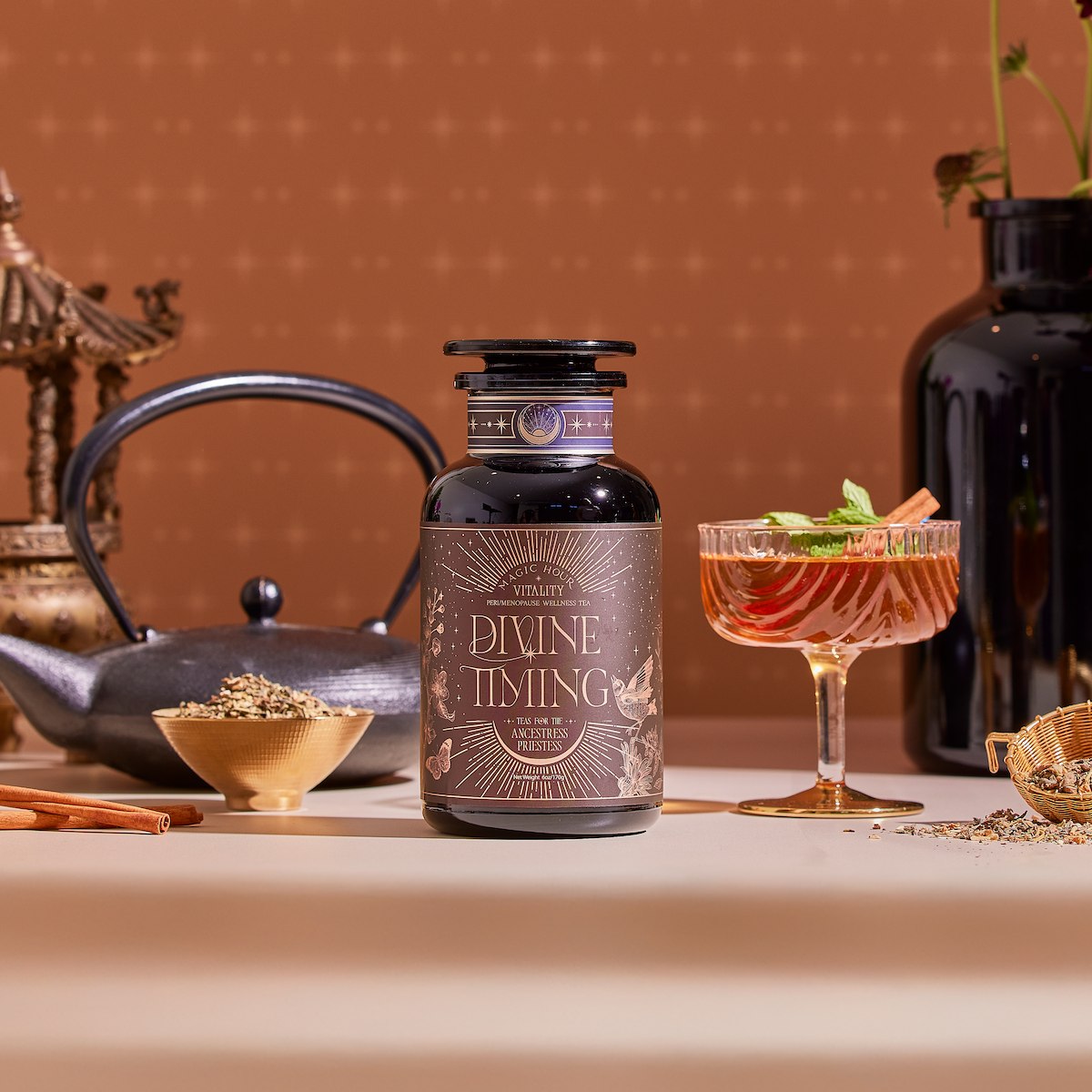
Green tea provides caffeine, generally in a gentler format than a strong cup of coffee, while ginger, peppermint, rosemary, orange peel, and cinnamon create a bright and awakening flavor profile. Divine Timing Vitality combines these ingredients with tulsi, shatavari, gymnema, and raspberry leaf for a blend intended for daytime energy and clarity.
In our internal study of 20 participants, 85% of participants experienced less fatigue throughout the day after drinking the Divine Timing Vitality Magic Hour tea after 30 days of single use.*
Because Vitality contains green tea, enjoy it in the morning or early afternoon if caffeine interferes with your sleep. Menopause can change caffeine sensitivity, so pay attention to your own response rather than following a universal rule.
On days when hot flashes feel easily triggered, you may also prefer it cooled over ice. A tea does not need to be steaming to remain a ritual.
How to choose the right menopause tea
The herbs above can be enjoyed individually, but a thoughtful blend can bring several of them into one balanced cup. Magic Hour’s Divine Timing collection was created around four different moments in the day rather than the idea that one tea should answer every experience.
|
What you are seeking |
Herbs commonly found in tea |
Tea blend suggestion |
Best time to sip |
|---|---|---|---|
|
A cooling ritual when warmth rises |
Sage, red clover, spearmint, lemon verbena |
Morning or afternoon; also lovely served iced |
|
|
A grounding pause when the day feels overstimulating |
Lemon balm, tulsi, ashwagandha, spearmint, rose |
Afternoon or early evening |
|
|
A gentler transition into sleep |
Chamomile, passionflower, lavender, lemon balm, oat straw |
About 30–60 minutes before bed |
|
|
Brighter energy and mental clarity |
Green tea, ginger, peppermint, rosemary, tulsi |
Morning or early afternoon |
If you are unsure which ritual fits you, the Divine Timing Tea Bundle offers a way to experience all four before settling into a favorite.
A ritual for the season you are in
Menopause is often described only in terms of what is ending. There is another way to hold it: as a threshold into a different relationship with energy, rest, pleasure, and time.
A cup of tea will not make every symptom disappear. But it can help you meet the moment with attention: something cooling when warmth rises, something grounding when the edges feel sharp, something gentle when the night asks you to release it, and something bright when morning returns.
Your body is changing its language. The ritual begins by listening.
This article is for general educational purposes and is not a substitute for medical advice. Herbal ingredients may cause side effects or interact with medications, so consult a qualified healthcare professional before use if you take medication, receive hormone therapy, have a medical condition, or are pregnant or nursing.
These statements have not been evaluated by the Food and Drug Administration. This product is not intended to diagnose, treat, cure, or prevent any disease.
*Individual results may vary. Not evaluated by the FDA. Not intended to diagnose, treat, cure, or prevent any disease.
Frequently asked questions about tea and menopause
What is the best tea for menopause?
The best tea depends on what you are experiencing and when you plan to drink it. Sage, red clover, spearmint, and lemon verbena can suit a cooling ritual, while chamomile, passionflower, lavender, and lemon balm are natural choices for the evening. Green tea, ginger, peppermint, and rosemary may be better suited to daytime energy and mental clarity.
What tea is good for hot flashes and night sweats?
Sage and red clover are commonly included in menopause tea blends, while spearmint and lemon verbena can give an infusion a fresh, cooling character. If a hot drink feels uncomfortable when warmth rises, prepare the tea ahead of time and serve it over ice.
What tea is good for menopause sleep problems?
A caffeine-free evening blend containing herbs such as chamomile, passionflower, lavender, lemon balm, or oat straw can complement a bedtime routine. More important than the number of herbs is choosing a tea you enjoy enough to make part of a consistent bedtime routine. Try drinking it 30 to 60 minutes before bed while lowering the lights and stepping away from work and screens. Persistent insomnia or night sweats deserve a conversation with a healthcare professional.
What is Magic Hour?
Magic Hour is a woman-owned tea company founded by master tea blender and ceremony keeper Zhena Muzyka. The brand creates premium wellness teas and tea rituals designed to bring healing, connection, and intention into everyday life. Magic Hour works with artisan growers, regenerative farms, and fair trade partners around the world.
Are Magic Hour teas third-party tested?
Yes, all of our teas undergo rigorous third-party testing to ensure they meet the highest standards for quality, purity, and safety. We proudly hold certifications for each blend, so you can sip confidently, knowing that our teas are crafted with care and integrity.
Which Magic Hour teas are made for perimenopause and menopause?
Magic Hour’s Divine Timing collection includes four blends created for different moments and needs. Balance offers a cooling ritual, Calm is designed for grounding and recentering, Rest complements a caffeine-free bedtime routine, and Vitality contains green tea for daytime energy and clarity. The Divine Timing Tea Bundle includes all four blends.